

Citizenship
Definitive Singapore Citizenship Application Guide 2026
Complete guide to Singapore citizenship application in 2026. Covers eligibility pathways, ICA assessment factors, required documents, step-by-step process, fees, processing times, and the February 2026 policy update on increased intake.
Last updated: March 2026
Introduction
Applying for Singapore citizenship affects your passport, housing costs, education fees, and your family's long-term future. The process involves multiple steps, specific document requirements, and a wait that often stretches well past 12 months. This guide walks you through eligibility, documents, the application process, and what happens after approval, based on current ICA requirements.
Recent policy update on Singapore citizenship
A note on the numbers: In February 2026, Deputy Prime Minister Gan Kim Yong announced that Singapore will take in between 25,000 and 30,000 new citizens annually over the next five years, up from around 25,000 granted in 2025 and a five-year average of roughly 21,300 between 2020 and 2024. This is the largest upward adjustment in citizenship intake in over 15 years, driven by a record-low total fertility rate of 0.87 in 2025 and projections that the citizen population could start shrinking by the early 2040s without intervention. The government will also increase PR intake to about 40,000 per year (up from 35,000 in 2025). The total number of citizenship applications is harder to pin down because many are family applications covering multiple people. If you count individual applicants (estimated at 80,000 to 100,000), the approval rate sits closer to 20-25%. If you count applications as units (around 50,000), the rate is closer to 40%. Either way, approval remains competitive, but the expanded intake means more slots are available now than at any point in the past decade. The rest of this guide is designed to help you put together the strongest application possible.
February 2026 Policy Update
Key numbers from DPM Gan Kim Yong's announcement
25,000–30,000
New citizenships per year (2026–2030)
~40,000
PR intake per year (up from 35,000)
0.87
Record-low total fertility rate (2025)
1 in 5
Citizens now aged 65+
Source: Committee of Supply debate, 26 February 2026
Why apply for Singapore citizenship?
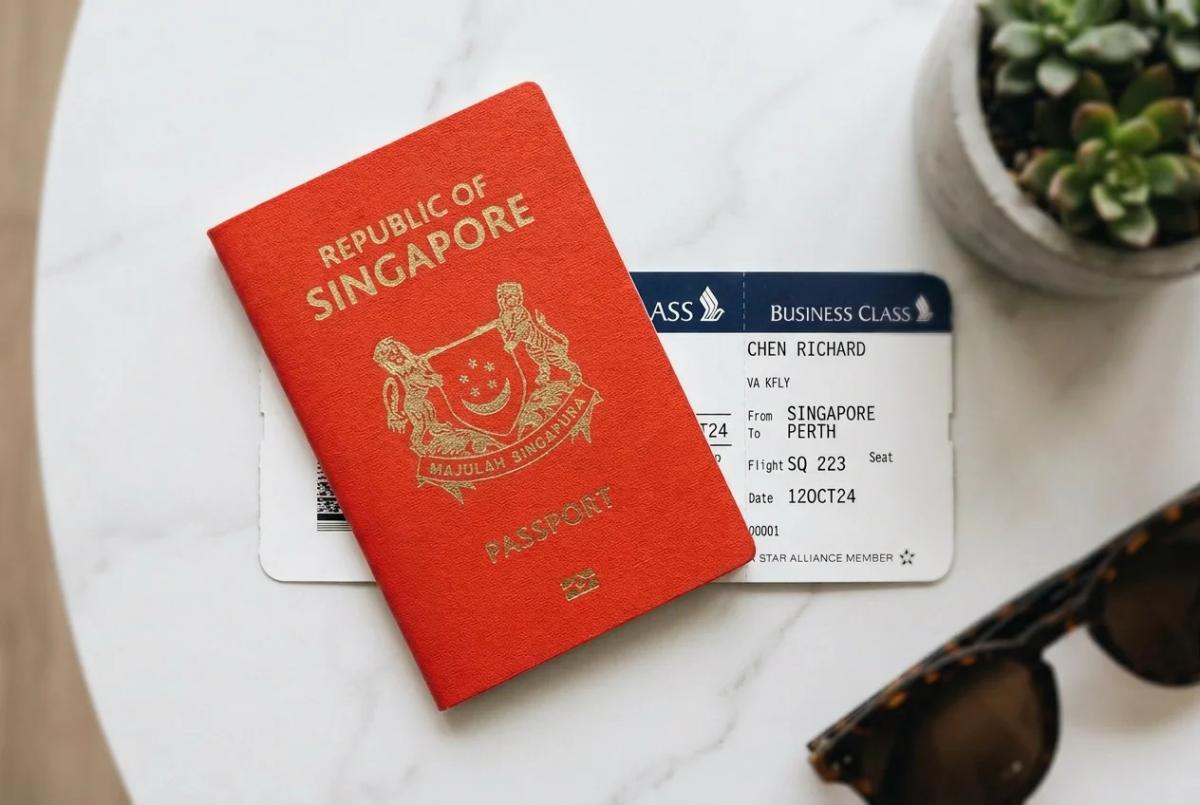
Before getting into the how, here are the practical advantages that come with citizenship over PR status.
Your passport becomes one of the strongest in the world. Singapore passport holders have visa-free or visa-on-arrival access to over 190 countries and territories. As a PR, you travel on your home country passport.
Housing costs drop significantly. Citizens can purchase new HDB Build-To-Order (BTO) flats at subsidised prices and pay no Additional Buyer's Stamp Duty (ABSD) on their first residential property. PRs are limited to resale HDB (after three years), and pay 5% ABSD on their first property. For a S$500,000 flat, that ABSD difference alone is S$25,000.
School fees are a fraction of what PRs pay. At the primary level, citizens pay no school fees (total monthly fees including miscellaneous are about S$13). PRs pay S$330 per month in school fees. Non-ASEAN international students pay S$1,035 per month. At the secondary level, citizens pay S$5 per month in school fees (S$25 total with miscellaneous), while PRs pay S$680. Over 10 years of schooling for one child, the savings run into tens of thousands of dollars.
Healthcare subsidies are substantially higher for citizens at public hospitals and polyclinics, including MediShield Life coverage and Medisave contributions. Ward charges, specialist outpatient fees, and medication costs are all lower.
During the first two years of PR status, employer CPF contributions are significantly lower than for citizens (4% in Year 1, 9% in Year 2, compared to 17% for citizens aged 55 and below). From Year 3 onward, PR rates match citizen rates. For newer PRs, citizenship means an immediate jump to full CPF contributions, which adds up to several hundred dollars per month going toward your housing loan, healthcare, and retirement.
Citizens are eligible for the Baby Bonus cash gift (S$11,000 for the first and second child, S$13,000 for the third and subsequent children), the Child Development Account (CDA) with government co-matching, Working Mother's Child Relief (15-25% of earned income for children born before 2024; fixed amounts of S$8,000-12,000 per child for children born from 2024 onward), and infant care subsidies of up to S$1,310 per month (S$600 basic subsidy plus income-tested additional subsidy of up to S$710).
Citizens also get priority in BTO ballot allocation and in Primary 1 school registration, which matters in competitive neighbourhoods.
Reasons you might not want to apply
Not every PR should become a citizen. Here are the real trade-offs you need to consider.
You must give up your current citizenship. Singapore does not allow dual nationality. If your home country passport gives you benefits that matter to you, such as visa-free access to regions Singapore does not cover, property rights, or pension entitlements, you lose those permanently. You cannot get your home country passport back. Some countries, including India and China, make renunciation final with no path to return.
Your sons will serve National Service. All male Singapore citizens must complete approximately two years of full-time NS, followed by reservist obligations until age 40 (or 50 for officers). If your sons are already past the typical enlistment age and have not served, this creates a complicated situation. NS is a serious, non-negotiable commitment, and it should be part of your family's discussion before you even begin the application.
CPF savings are largely illiquid until retirement age. While higher CPF contributions are an advantage, those funds are locked up. If you plan to leave Singapore later in life, withdrawing your CPF requires permanently giving up your citizenship, and even then withdrawal rules have restrictions.
Property and inheritance in your home country may be affected. Some countries restrict property ownership by foreign nationals. If you own land or property back home, check whether renouncing citizenship forces a sale or transfer. Inheritance laws in some jurisdictions treat non-citizens differently. Few applicants think this through early enough, especially those with family property in India, China, or Malaysia.
Citizenship is also harder to undo than PR. A PR who wants to leave Singapore can let their Re-Entry Permit lapse. A citizen who wants to leave must formally renounce, deal with CPF withdrawal rules, and, if male, ensure all NS obligations are settled. The exit costs are much higher.
If citizenship still makes sense for your family after considering these trade-offs, the next sections show you how to build a strong application.
Who can apply for Singapore citizenship?

ICA recognises five categories of applicants. You must fall into at least one of these groups before you can submit an application.
Eligibility Categories
Five pathways to Singapore citizenship
PR holders
PR for 2+ years, aged 21+. May include spouse and children under 21.
Spouse of citizen
PR married to a citizen for 2+ years. Citizen spouse sponsors via Singpass.
Minor child of citizen
Under 21, born in marriage or adopted by a citizen parent.
Student PR
Aged 15+, 3+ years in SG, 1+ year as PR, passed PSLE or GCE exam.
Aged parent of citizen
PR parent, sponsored by adult citizen child aged 21+.
1. Permanent residents (individual or family application)
You are eligible if you have held Singapore Permanent Resident (PR) status for at least two years and are aged 21 or above. You may include your spouse (also a PR) and any unmarried children under 21 in a single joint application.
This is the most common pathway. ICA does not set an official minimum number of years you should hold PR before applying, but applicants with 3 or more years of PR residency have higher approval rates based on industry patterns. Longer residency shows commitment and gives you more time to build the economic and community ties that ICA looks for.
2. Spouse of a Singapore citizen
If you are a PR who has been married to a Singapore citizen for at least two years, your citizen spouse can sponsor your citizenship application. The sponsoring spouse will need to log in with their own Singpass to submit the application on your behalf.
3. Minor child of a Singapore citizen
Unmarried children under 21 who were born within a legal marriage to, or legally adopted by, a Singapore citizen can be sponsored by their citizen parent. The citizen parent submits the application through the ICA e-Service.
4. Student permanent residents
PR students are eligible if they are at least 15 years old, have lived in Singapore for more than three years (with at least one year as PR), and have passed a national examination. Accepted exams include the PSLE, any GCE-level examination, or entry into the Integrated Programme (IP).
Students aged 15 and above apply using their own Singpass. For students under 15, a non-Singpass application route is available through the ICA e-Service.
5. Aged parent of a Singapore citizen
If you are a PR and the aged parent of a Singapore citizen who is at least 21 years old, your adult child can sponsor your citizenship application.
What does ICA actually look at when assessing applications?
Meeting the minimum eligibility requirements does not guarantee approval. ICA evaluates each application case by case, and there is no published scoring system. However, based on ICA's publicly stated criteria and patterns seen across rejections and appeals, these are the factors that carry weight.
Personal and demographic factors
Age. Younger applicants (under 50) with working years ahead are preferred because ICA values long-term economic contribution. Age itself is not a knockout factor, but it helps.
Length of residency. ICA checks whether you actually live here. Extended time abroad during your PR years weakens your application. ICA can see your travel records.
Educational background. Degrees, professional certifications, and specialised training, particularly in sectors Singapore is looking to grow: technology, biomedical sciences, financial services, and green energy.
Awards and achievements. Industry recognition, patents, publications, or other measurable accomplishments that demonstrate expertise.
Family factors
Marital status and family composition. Being married with children settled here suggests you plan to stay. Single applicants are not disadvantaged outright, but families present a stronger case.
Children in local schools. Local school enrollment is a strong indicator because it shows your children will grow up in Singapore, not somewhere else. International school enrollment sends a different signal.
Family ties to Singapore citizens. Extended family relationships, such as siblings, parents, or in-laws who are citizens, can strengthen your profile.
Economic and financial factors
Employment stability and income. Stable employment with a consistent or upward income trajectory matters. Frequent job changes or gaps in employment raise questions.
Salary level relative to your industry. ICA does not publish a minimum salary, but your income should be competitive for your role and experience level. A S$4,000 salary for a mid-career professional in finance would look weak because it suggests the applicant is not in a competitive role for their field.
Tax contributions. Your income tax history over the past three years shows your economic contribution to Singapore.
CPF contribution history. Consistent CPF contributions demonstrate stable, legitimate employment.
Property ownership. Owning property in Singapore (HDB or private) is a strong signal of financial commitment.
Insurance and investment holdings. Life insurance policies, investment accounts, or savings plans held in Singapore suggest you are planning your financial future here.
Community and integration factors
Volunteering and grassroots participation. This goes beyond token involvement. Regular participation in Community Centre activities, residents' committees, or grassroots organisations over a sustained period carries weight. One-off events do not move the needle.
Social integration. Do you interact with the local community? Are you involved in your children's school activities, religious organisations, or neighbourhood events?
Professional contributions. Mentoring junior professionals, taking on board roles in industry bodies, or consulting for government agencies all show you are invested in Singapore's economy.
Language ability. While not a stated requirement, the ability to communicate in English (and ideally a second national language) facilitates integration and can strengthen your overall profile.
When is the best time to apply?
Get the timing right and you improve your chances. Get it wrong and you waste a year waiting for a rejection.
Tip: Wait at least three years as PR, even though two is the technical minimum. Applications submitted right at the two-year mark with thin engagement history have lower success rates.
Align your application with life milestones. Just been promoted? Children enrolled in local schools? Bought property? These all strengthen your profile. If a positive development is coming in the next few months, it may be worth waiting.
Do not apply during instability. If you recently changed jobs, are going through a divorce, or have been living overseas for extended periods, wait until your situation stabilises.
Tax filing season matters. ICA looks at your NOA (Notice of Assessment). If your most recent NOA shows a strong income year, that is a good time to apply. If you had an unusually low-income year, consider waiting for the next filing.
There is no penalty for waiting. Unlike some countries, Singapore does not penalise you for holding PR for 5, 10, or even 15 years before applying for citizenship. Apply when your profile is genuinely strong, not when someone tells you the minimum waiting period is up.
2026-2030 is a window worth noting. The government's announcement that it will grant 25,000 to 30,000 citizenships annually over the next five years means more approvals than at any point in recent history. DPM Gan Kim Yong also confirmed the government is open to taking a fresh look at previously rejected applicants. That said, increased intake does not mean lower standards. ICA's evaluation criteria remain the same, and competition still happens primarily within ethnic groups to maintain the broad ethnic balance. More slots are available, but each individual application is assessed on its own merits. If your profile is ready, the next five years offer a favourable environment to apply.
Does ICA have annual quotas?
For years, the government neither confirmed nor denied annual quotas. The number of new citizenships granted each year was remarkably consistent at around 20,000 to 23,000 from 2015 to 2024, which suggested some form of managed intake.
In February 2026, that picture changed. DPM Gan Kim Yong announced in Parliament that Singapore will grant between 25,000 and 30,000 new citizenships annually over the next five years (2026-2030). He also confirmed the government would increase PR intake to about 40,000 per year. These targets will be reviewed again by 2030 based on fertility trends and demographic changes.
The reason is straightforward: Singapore's total fertility rate fell to a record low of 0.87 in 2025, with only around 27,500 resident births, the lowest in the country's recorded history. One in five citizens is now aged 65 or above, compared to one in eight a decade ago. Without increased immigration, the citizen population is projected to start shrinking by the early 2040s.
The government also confirmed it will maintain the broad ethnic balance of the citizen population. Data over the past decade shows the proportions (roughly 74% Chinese, 13.5% Malay, 9% Indian, 3.5% Others) have remained extremely consistent, with standard deviations of less than 0.15%. In practice, this means competition for citizenship slots happens primarily within ethnic groups, not across them.
What this means for applicants: the government has, for the first time, publicly committed to a higher annual intake with a specific five-year timeline. This does not lower the bar for individual applications, but it does mean more qualified applicants will be approved than in any recent period. Focus on building the strongest profile you can.
Documents you will need
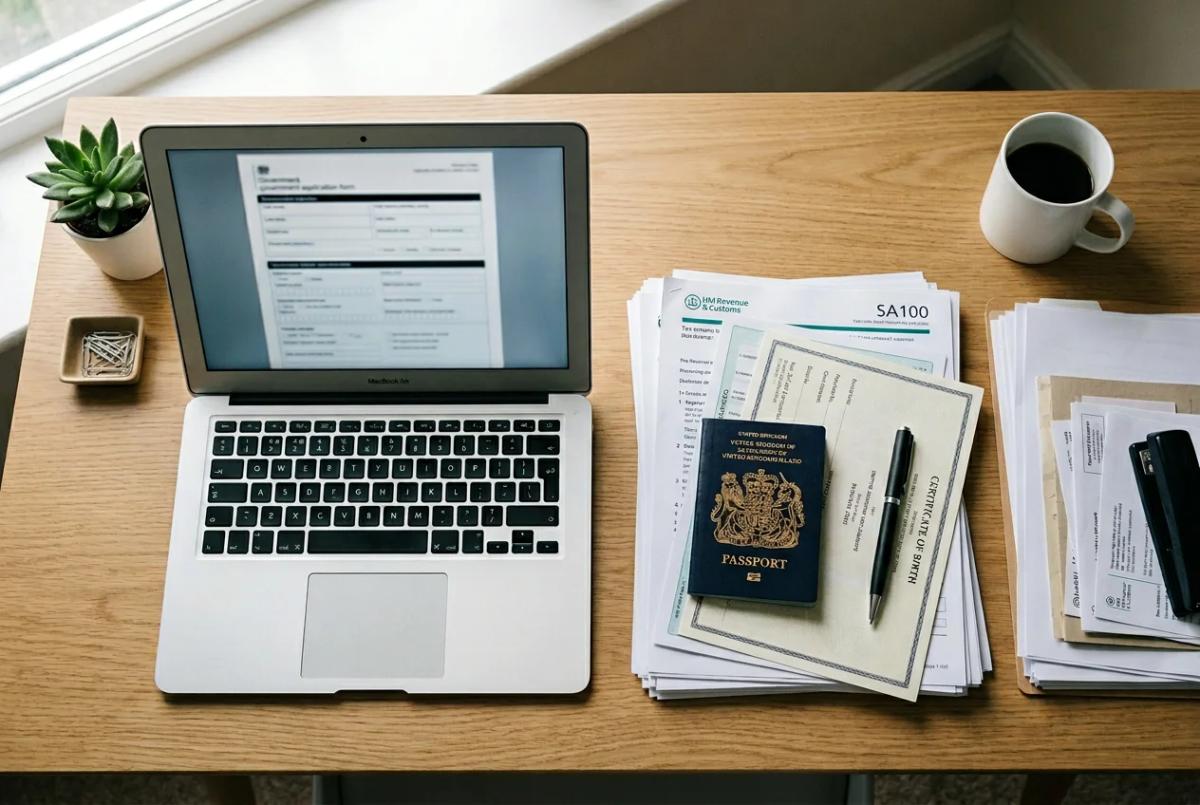
ICA provides an official document checklist (available as a PDF on their website), but here is what to prepare for most applicants.
Personal identification
- Valid passport or travel document (for non-ICA-issued documents)
- Birth certificate (if birth was not registered in Singapore)
- Singapore NRIC
- Marriage certificate (if applicable, and if marriage was not registered in Singapore)
- Divorce or separation documents (if applicable)
- Deed poll or name change documents (if applicable)
Employment and financial records
- Employment letter from your current employer, stating your position, salary, and start date
- Payslips for the past six months
- Income tax Notices of Assessment (NOA) for the past three years
- CPF contribution history
- For self-employed applicants: ACRA business registration, balance sheets, profit-and-loss statements, and tax filings for the past three years
Educational documents
- Academic certificates and transcripts
- Professional qualifications and certifications
Supporting documents
- PR card
- Cover letter (optional but recommended): this is your chance to explain your ties to Singapore and reasons for wanting citizenship in your own words
The Achievements field
The 4,000-character Achievements field in the online application is where you make your case directly to ICA. Treat it as the most important free-text space in the entire form.
Use it to describe your professional accomplishments, community involvement, and personal contributions to Singapore. Be specific: mention the organisations you have volunteered with, the duration of your involvement, awards received, and skills that benefit Singapore's economy.
Tip: Do not write generic statements like "I love Singapore and want to contribute to its future." Instead, write something like: "I have volunteered with [specific organisation] since [year], contributing approximately [X] hours per month to [specific activity]." ICA reviewers read hundreds of these. Specifics stand out; platitudes do not.
Translation and certification requirements
All documents in languages other than English must be translated and certified. ICA accepts translations from the embassy of the issuing country, a notary public in Singapore or in the issuing country, or private translators with embassy attestation or notarisation.
Submitting incomplete or incorrectly certified documents is one of the most common reasons applications stall. Double-check everything before you upload.
Step-by-step application process
Application Process
Seven steps from start to submission
Register for Singpass
Create your account 2–5 working days before starting the application.
Access ICA e-Service
Log in to the citizenship application portal with your Singpass credentials.
Complete the form
Fill in personal details, employment, family info, and the Achievements section.
Upload documents
Scan and upload all required documents. You have 7 days to complete this step.
Sign declarations
All applicants (including spouse) must digitally sign the declaration.
Pay S$100 fee
Per applicant. Visa, Mastercard, AMEX, internet banking, or PayNow. Non-refundable.
Download receipt
Save the acknowledgement receipt and reference number to track your status.
Processing time: 18–24 months (typical)
Step 1: Register for Singpass
All applicants need a Singpass account. If you do not have one, register through the Singpass website. Approval takes two to five working days, so do this well ahead of your planned submission date.
For applications involving family members: if your citizen spouse is sponsoring you, they log in with their Singpass. If you are applying with your spouse and children, you submit the application. For minor children under 15, a non-Singpass route is available.
Step 2: Access the ICA e-Service
Go to the ICA website and navigate to the citizenship application e-Service. Log in with your Singpass credentials.
Step 3: Complete the application form
Fill in all mandatory fields (marked with asterisks). The form covers personal particulars, employment details, family information, and the Achievements section. You can save your progress and return later.
Step 4: Upload your documents
Scan and upload all required documents in the formats accepted by the system. Make sure scans are clear and legible.
Tip: You have seven days from the time you start your application to fill in your particulars and upload all documents, then another seven days to review and submit. Miss these windows and you start over. This is why experienced applicants gather all documents before beginning the online form.
Step 5: Declarations and submission
Each applicant included in the application (including your spouse, if applicable) must digitally sign a declaration. Review all information for accuracy before submitting.
Step 6: Pay the application fee
The fee is S$100 per applicant. Payment can be made via Visa, Mastercard, AMEX, internet banking (DBS/POSB, OCBC, UOB, Standard Chartered), or PayNow.
All fees are non-refundable, regardless of the outcome.
Step 7: Download your receipt
After successful submission, download the acknowledgement receipt for your records. You will need the reference number to check your application status.
Fees at a glance
Application Fees
What you will pay at each stage
S$100
Application fee Per applicant at submission. S$18 for overseas-born children of citizens. Non-refundable.
S$70
Citizenship certificate Paid after approval. Only for adult PRs and PR children. Not applicable for overseas-born.
S$10
Identity card (NRIC) For applicants aged 15 and above. Collected at the citizenship ceremony.
All fees are non-refundable regardless of outcome. Payment via Visa, Mastercard, AMEX, internet banking, or PayNow.
For overseas-born children of Singapore citizen parents, the application fee is S$18 per applicant instead of S$100, and there is no separate citizenship certificate fee.
How long does the process take?
ICA's official processing time is "within 12 months." In practice, many applicants report waiting 18 to 24 months. Simpler cases may be resolved in 6 to 9 months; more complex profiles or those requiring additional document requests can take over 2 years.
The gap between the official timeline and reality is worth knowing upfront so you can plan accordingly. Do not make irreversible decisions (like selling property overseas or giving up your foreign passport early) based on the assumption that your case will be resolved in 12 months.
For overseas-born children of Singapore citizen parents, processing typically takes about one month if everything is properly documented.
You can track your application status through the MyICA portal using your Singpass login. ICA will also send email notifications at key stages. During the processing period, ICA may contact you to request additional documents or clarification. Respond promptly, because delays on your end extend the overall timeline.
What happens after approval?
Approval is not the final step. There are several things to complete between receiving your In-Principle Approval (IPA) letter and officially becoming a Singapore citizen.
Singapore Citizenship Journey (SCJ)
If you are between 16 and 60 years old at the time of application, you must complete the mandatory Singapore Citizenship Journey programme within two months of your IPA letter. Applicants under 16 or above 60 are exempted.
The SCJ involves an online module (e-Journey) covering Singapore's history, governance, and national policies, which you complete at your own pace through the SCJ portal at sgjourney.gov.sg. There is also a guided visit to heritage sites and national institutions, conducted in English on weekends. Finally, you attend a community sharing session with grassroots leaders and other new citizens.
You can log into the SCJ portal with your Singpass three working days after your IPA letter is issued. All components must be completed before ICA will issue your final approval letter.
If you are part of a family application, every member aged 16 to 60 must complete the SCJ individually.
Renounce your foreign citizenship
Singapore does not allow dual citizenship. If you are 21 years or older, you will need to renounce your current citizenship after receiving the IPA. Contact the embassy or consulate of your home country to understand their renunciation process and timeline. Some countries process renunciation in weeks; others take months.
Start researching this early. Delays in renunciation can hold up your entire citizenship completion.
Check whether renouncing affects property ownership, inheritance rights, or pension entitlements in your home country. Some countries restrict what non-citizens can own, and you may need to make financial arrangements before renouncing.
Oath of Allegiance and citizenship ceremony
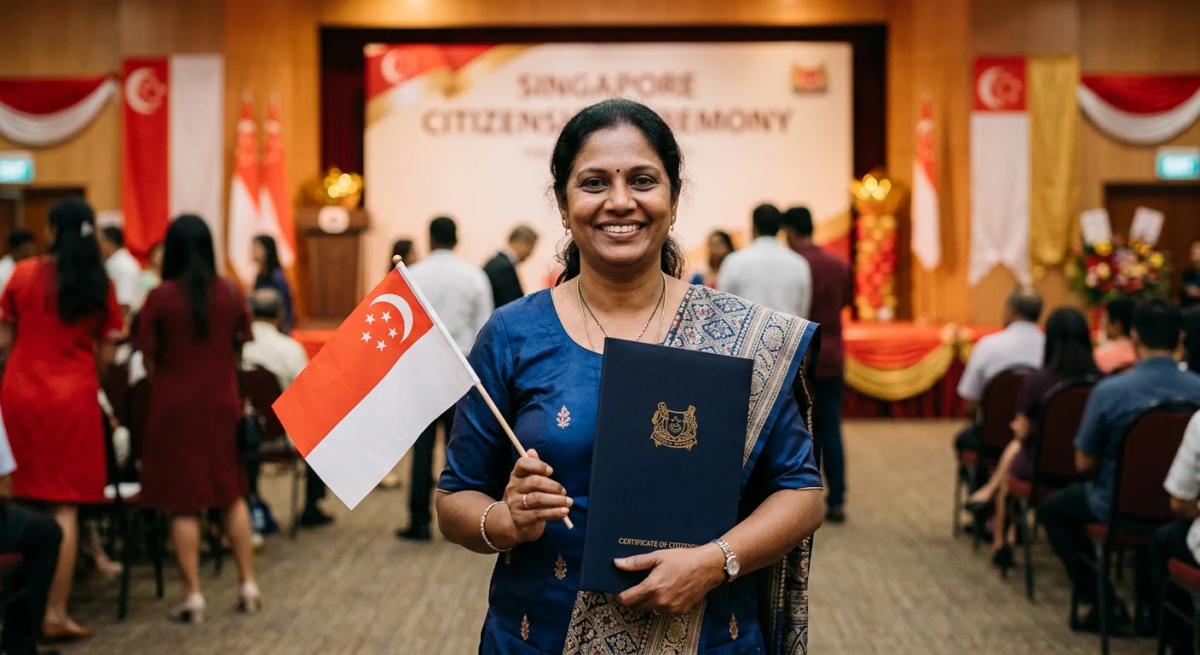
Once you have completed the SCJ and renounced your foreign citizenship, you will be invited to attend a citizenship ceremony. At the ceremony, you take the Oath of Allegiance to the Republic of Singapore, receive your Singapore Citizenship Certificate, and collect your new NRIC (for those aged 15 and above).
Ceremonies are typically held at Community Clubs and presided over by a grassroots adviser or MP.
National Service obligations
Every family with sons should think through this carefully before applying.
Male Singapore citizens must register with CMPB (Central Manpower Base) at age 16.5, serve full-time for approximately two years starting at age 18, then maintain reservist obligations until age 40 (or 50 for officers).
MINDEF allows students to complete pre-tertiary education (up to A Levels, polytechnic diploma, or equivalent) before enlisting, but does not grant deferment for university studies.
If you have a son approaching NS age, citizenship formalises that obligation. Renouncing Singapore citizenship without having served or completed full-time NS creates serious consequences: it affects the individual's and their family members' future applications to work or study in Singapore. Penalties for defaulting include fines of up to S$10,000 and imprisonment of up to three years.
For questions about NS, contact CMPB at 1800-367-6767 (local) or +65-6567-6767 (overseas), or email contact@ns.gov.sg.
Common reasons applications are rejected
ICA does not disclose specific rejection reasons. But based on rejections and appeals discussed by former applicants, most unsuccessful applications fall into a few patterns.
The most common is applying too early. Submitting right at the two-year PR mark with minimal community engagement or short employment history is the single biggest misstep. ICA wants to see a track record, not just eligibility.
Sloppy documentation is the second most common problem. Missing payslips, expired documents, uncertified translations, or inconsistencies between your form entries and supporting documents can sink an otherwise strong application.
A weak economic profile also hurts. Unstable employment, frequent job changes, or low income relative to your industry and experience level raise concerns about long-term sustainability.
Limited community integration is harder to fix quickly. Living in an expat bubble without meaningful engagement in local activities or community organisations makes it harder for ICA to see long-term commitment.
Extended periods overseas during your PR years suggest you may not be rooted here. Criminal records of any kind, including minor offences, adversely affect your application. And for male applicants, failing to acknowledge or plan for NS obligations is a red flag.
What to do if your application is rejected
A rejection does not permanently bar you from reapplying. There is no official waiting period, though submitting an identical application immediately is unlikely to produce a different result.
There is also a new development worth knowing about. In February 2026, DPM Gan Kim Yong confirmed in Parliament that the government is keeping all options open to boost the citizen population, including taking a fresh look at previously rejected applicants. He noted that some past rejections were for specific reasons, and that assimilability remains the key consideration. This does not mean automatic reconsideration, but it signals that a past rejection is not a permanent mark against you, especially if your circumstances have improved since your last application.
Take time to understand what may have weakened your case. Common steps before reapplying:
- Build a longer track record of stable employment and PR residency
- Increase community involvement through volunteering and grassroots participation
- Strengthen your Achievements section with specific examples
- Ensure all documentation is complete and current
- Address any gaps in your profile such as extended time overseas
Some applicants work with an immigration consultant for a professional assessment of their profile before reapplying.
Should you hire an immigration consultant?
You can submit a citizenship application entirely on your own through ICA's e-Service. The form itself is not complicated. Where most applicants run into trouble is not the submission process but the decisions that come before it: whether their profile is strong enough to apply now or whether waiting another year would improve their chances, how to write the 4,000-character Achievements field so it actually lands with ICA reviewers, which supporting documents to include beyond the minimum checklist, and how to handle complicating factors like multiple citizenships, gaps in employment, or a previous rejection.
These are judgement calls, and they are hard to make when you are evaluating your own profile. A consultant who reviews citizenship applications regularly sees patterns you do not. They know which profiles tend to get approved, which tend to get rejected, and what the difference usually comes down to. They can also catch documentation mistakes that cause unnecessary delays or returns.
Working with a consultant is especially worth considering if you have been rejected before and are not sure why, if you are unsure whether your PR residency and integration record is strong enough, if your case involves complicating factors like renouncing a citizenship that affects property or pensions in your home country, if you are submitting a family application with multiple members, or if you simply want a professional review before committing to the 12-to-24-month wait.
ICA does not endorse any specific consultancy and has no affiliation with external migration agencies. No consultant can guarantee approval, and you should be wary of anyone who claims otherwise. What a good consultant can do is improve the quality of your application and reduce the risk of avoidable mistakes.
At Singapore Top Immigration, we help PRs assess their readiness for citizenship, identify gaps in their profile, and put together applications that present the full strength of their case. If you are unsure whether your application is ready, a free consultation can give you a clear picture of where you stand.
Singapore citizenship vs. permanent residency: key differences
If you are weighing whether to apply for citizenship or remain a PR, here are the main differences:
Comparison
| Factor | Singapore Citizen | Permanent Resident |
|---|---|---|
| Voting rights | Yes (compulsory) | No |
| Passport | SG passport (190+ countries) | Home country passport |
| HDB purchase | New BTO + resale flats | Resale only (after 3 yrs) |
| ABSD (1st property) | 0% | 5% |
| Primary school fees | S$0 /month | S$330 /month |
| Secondary school fees | S$5 /month | S$680 /month |
| Baby bonus | S$11K–13K per child + CDA | Not eligible |
| NS obligation | Mandatory for males | 2nd-gen male PRs only |
| Dual citizenship | Not allowed | Can retain foreign citizenship |
| Re-Entry Permit | Not required | Must renew every 5 years |
For many long-term residents, the benefits of citizenship outweigh the loss of their original nationality, particularly around housing, education, and healthcare subsidies. But it depends on your personal circumstances, especially if you have financial or property ties to your home country.
Frequently asked questions
How long after getting PR can I apply for citizenship? You must hold PR for at least two years. There is no maximum waiting period, and waiting longer (3-5 years) can strengthen your application.
Can I apply for citizenship if I am self-employed? Yes. You will need to provide additional financial documents including ACRA registration, financial statements, and three years of tax filings.
Does Singapore allow dual citizenship? No. You must renounce your foreign citizenship after receiving In-Principle Approval. This applies to applicants aged 21 and above.
How much does the citizenship application cost? S$100 per applicant for submission, plus S$70 for the citizenship certificate and S$10 for a new NRIC upon completion. All fees are non-refundable.
Can I check my application status online? Yes, through the MyICA portal using your Singpass login.
What is the Singapore Citizenship Journey (SCJ)? A mandatory programme for new citizens aged 16-60 that includes an online learning module, a heritage site visit, and a community sharing session. You must complete it within two months of your IPA letter.
Will my son have to serve National Service? Yes. All male Singapore citizens must serve NS. Registration begins at 16.5 years old and full-time service starts at 18.
What happens if I am rejected? You can reapply. There is no official waiting period, but you should address the weaknesses in your original application before resubmitting.
Do I need an immigration consultant to apply? No, you may submit the application directly to ICA through their online e-Service, and many people handle it themselves. Where consultants add the most value is before you submit: assessing whether your profile is strong enough to apply now, helping you write the Achievements section effectively, and catching documentation issues that cause delays or returns. If your case involves complicating factors like a previous rejection, extended time overseas, or a large family application, professional guidance can make a real difference in the quality of what you submit.
Can I include my spouse and children in my application? Yes, if they are also PRs. Your spouse and unmarried children under 21 can be included in a joint application.
How long does the application really take to process? ICA says within 12 months. In practice, many applicants wait 18 to 24 months. Simpler cases may be resolved in 6 to 9 months.
What is the approval rate for Singapore citizenship? Historically, around 20,000 to 23,000 citizenships were approved annually. From 2026, the government plans to grant 25,000 to 30,000 per year. The effective approval rate depends on how you count: approximately 20-25% of individual applicants, or around 40% of application units (since many applications cover families). The expanded intake improves overall odds, but individual applications are still assessed on merit.
Ready to take the next step?

If you have been a Singapore PR for two or more years and are considering citizenship, the 2026-2030 period offers the most favourable intake environment in over a decade. But more available slots does not mean less competition. Preparation still makes a real difference. Getting your documents in order, understanding the timeline, and presenting a strong profile to ICA all improve your chances.
At Singapore Top Immigration, we help PRs assess their readiness for citizenship, organise their documentation, and put together applications that present the full strength of their profile.
Book a free consultation to discuss your citizenship application with our team.
Last updated March 2026. Rules change; always check the ICA website for current requirements. Singapore Top Immigration is an independent immigration consultancy and is not affiliated with ICA.
Go Deeper
Related Guides
Definitive Singapore PR Application Guide 2026
Complete guide to applying for Singapore Permanent Residence in 2026. Covers all 7 eligibility categories, required documents, step-by-step ICA e-Service process, fees, processing timeline, and what to do after approval.
Keep Reading