Citizenship Application
When Your Child Is a Singapore Citizen but You're Still a PR
A reassuring guide for mixed-status families where a child is a Singapore Citizen and a parent is a PR: benefits, HDB, NS, and the path to citizenship.
If your child is a Singapore Citizen but you are still a Permanent Resident, you are part of what is often called a mixed-status family, and you are far from alone. This is a common and completely normal situation in Singapore, where one parent may already hold citizenship, or a child born to a Singaporean has become a citizen while the other parent is still working through their own residency journey. It can feel unsettling to hold a different status from your own child, but a child citizen and PR parent situation in Singapore rarely causes the problems people fear. More often it works in your family's favour.
This guide covers how mixed-status families come about, what your citizen child is entitled to, how your family is treated for housing and National Service, and what your child's citizenship means for your own PR and eventual citizenship. We also clear up the misconceptions that cause families the most worry.
How does a mixed-status family happen?
Mixed-status families come about in a few ordinary ways. Knowing which one applies to you helps you plan the next steps.
The most common route is a child born in Singapore to at least one Singaporean parent. Under Singapore law, a child born here to a Singapore Citizen parent is generally a citizen from birth, regardless of the other parent's status. So a household with one Singaporean parent and one PR parent will typically have citizen children, even while the PR parent works towards their own status.
A second route is citizenship by descent, for a child born overseas to a Singaporean parent. Here the child is not automatically registered, and the parent must register the birth. According to the Immigration and Checkpoints Authority (ICA), the registration should be done within one year of birth, either at a Singapore Overseas Mission or with ICA, and legal parentage must be established. Since a 2004 constitutional amendment, citizenship by descent is gender-neutral, so a Singaporean mother or father can pass on citizenship to a foreign-born child.
There is one condition worth knowing. If the Singaporean parent is themselves a citizen by descent, they can transmit citizenship by descent only if they had lived in Singapore for at least five years in total before the birth, or two of the five years immediately before it. If not met, the family may apply for the child's citizenship by another route.
The third route is citizenship by registration for a minor. Where a child is not automatically a citizen, a Singaporean parent may apply to register the child. This suits families whose circumstances did not fit the automatic or by-descent rules but where the parent wishes to bring the child's status in line with their own. A legally adopted child of a Singapore Citizen can also be registered for citizenship, so adoptive families reach the same position as families with a child who is a citizen by birth.
Whichever route applies, the result is the same: you have a citizen child and, for now, a different status yourself. There is no rush to change that.
What your citizen child is entitled to
Your child's benefits follow the child's status, not yours. Your son or daughter receives the full set of Singapore Citizen benefits even though you are a PR. These are the main citizen child, PR parent benefits worth knowing about.
Schooling and Edusave
Singaporean children pay no monthly fees for primary school and only nominal fees at higher levels (a few dollars a month at secondary and pre-university), and they receive an Edusave account with an annual government contribution. PR children, by contrast, pay materially higher monthly school fees at every level and do not receive Edusave. As at 2026, a PR child in a government or government-aided school pays a monthly primary-school fee where a citizen child pays nothing, and PR fees at secondary level run into the hundreds of dollars a month against a few dollars for a citizen. (Exact fee tables are set by the Ministry of Education and revised periodically, so confirm current figures with MOE.) Because the benefit tracks the child, your citizen child gets the citizen treatment even though you hold PR.
Citizenship also matters for Primary 1 registration priority. Singapore Citizen children receive top priority, ahead of PR and international children, so your child registers on the citizen track. This is a real, practical advantage in securing a place at a preferred school.
Healthcare and parenthood support
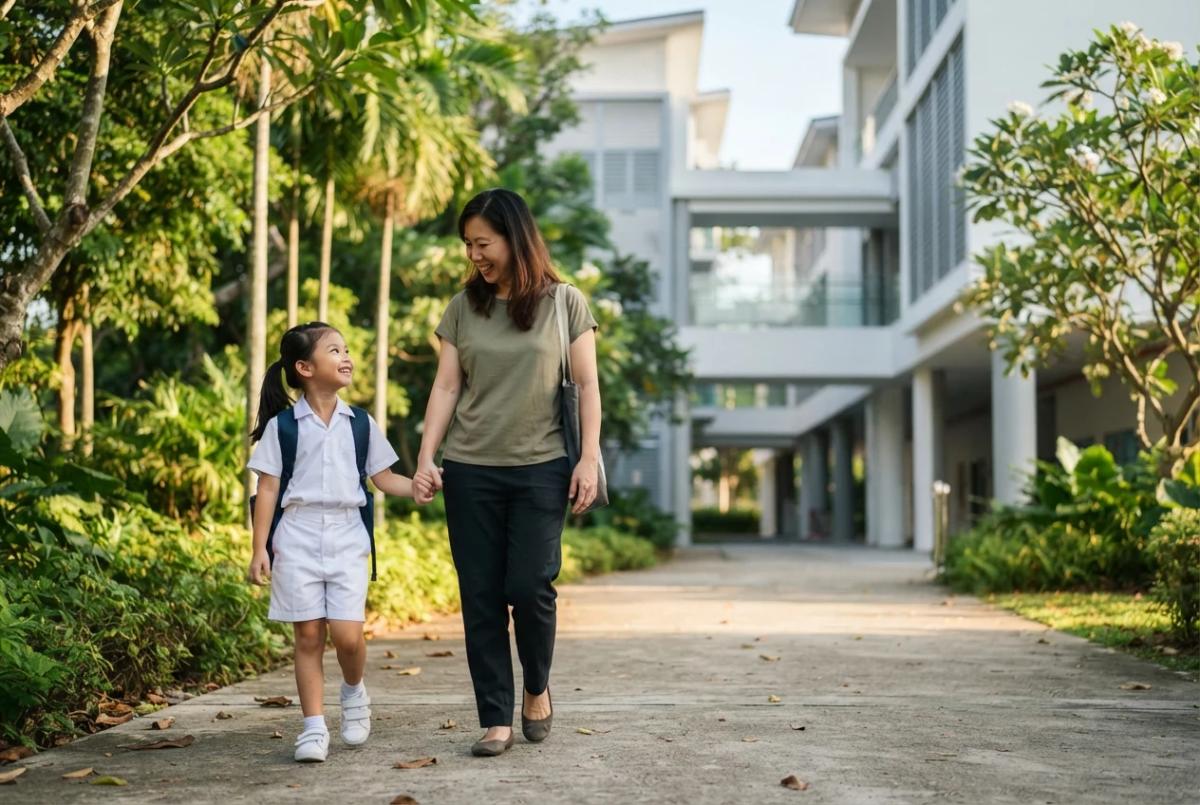
Singaporean newborns receive a substantial package of healthcare and parenthood benefits that PR and foreign newborns do not. These include a MediSave Grant for Newborns, automatic MediShield Life coverage from birth (including for congenital and neonatal conditions), the Baby Bonus cash gift, and matched contributions into a Child Development Account. Singaporean children at approved childcare and infant-care centres also qualify for preschool subsidies, with additional subsidies for eligible households. Again, your child receives all of this by virtue of being a citizen.
The benefit follows the child
The point to hold on to is that your PR status does not dilute your child's citizen entitlements. Schooling, healthcare, and parenthood support are assessed on the child's citizenship, so a mixed-status family still gives its citizen child the full set of national benefits.
Mixed-status family
| Benefit | Citizen child | PR parent |
|---|---|---|
| Primary school fees | S$0 per month | PR pays a monthly fee |
| Primary 1 registration priority | Top priority on the citizen track | Ranks after citizens |
| Edusave account | Yes, with annual government top-up | Not eligible |
| Newborn healthcare | MediSave Grant for Newborns and MediShield Life from birth | Not eligible |
| Baby Bonus and Child Development Account | Yes: cash gift plus matched CDA | Not eligible |
| Preschool subsidies | Citizen subsidies apply | Limited or not eligible |
| Buying an HDB flat as a family | Forms an eligible household; mixed-household premium recoverable via Citizen Top-Up | Buys jointly with the citizen child in the household |
| National Service | Liable if male, as a citizen obligation | Not applicable to the PR parent |
| Sponsoring a parent for PR | Can sponsor from age 21 | LTVP serves as the interim residency bridge while the child is a minor |
| Effect on the parent's PR or citizenship case | Family ties to a Singaporean child are a recognised positive factor | Assessed holistically by ICA; PR is not granted automatically |
Buying a home as a mixed-status family
Housing is often the biggest practical question for a mixed SC/PR family, and the news here is largely positive.
A household made up of a Singapore Citizen and one or more PR members is an eligible household to buy an HDB flat. Where a first-timer household is made up of one Singapore Citizen and one or more PR members, a premium currently applies at the point of purchase. Crucially, that premium can be recovered through the Citizen Top-Up scheme when a household member becomes, or already is, a Singapore Citizen. In a family where the child is already a citizen, or where the PR parent later takes up citizenship, the Top-Up mechanism is designed to return that premium.
Households with at least one citizen and first-time applicants can also access CPF Housing Grants, which reduce the cost of a first home. Exact premium and grant figures change over time, so confirm current numbers with HDB, but the structure is clear: a mixed-status family can buy an HDB flat together, and having a citizen in the household improves your position.
National Service for a citizen son
If your citizen child is a boy, National Service (NS) is part of the picture, and it is best approached honestly and calmly. Male Singapore Citizens are liable for NS. A citizen son in a mixed-status family carries the same obligation as any other citizen son.
This means registering for NS at the required age (after NRIC registration at 16 years and 6 months), completing two years of full-time NS, and then serving reservist (NSman) obligations. NS is a shared experience for citizen sons across Singapore and a real part of putting down roots here. It comes with citizenship itself and has nothing to do with your family's mixed status. You can read more in our guide to National Service and its links to PR and citizenship.
What your child's citizenship means for your own PR and citizenship
This is the question most PR parents really want answered: does having a citizen child help my own case? The honest answer is that it helps, though not automatically.
Family ties to Singaporeans are a recognised positive factor in ICA's assessment of both PR and citizenship applications. Having a Singaporean child strengthens your profile and signals that your family is rooted here. ICA assesses applications holistically, weighing family ties alongside your economic contribution, qualifications, age, family profile, length of residence, and your commitment to sinking roots. There is no published points score, and meeting the criteria is never a guarantee of approval, but a citizen child is a meaningful plus point in the mix.

There is also a direct sponsorship pathway, though timing matters. A Singapore Citizen child aged 21 or above can sponsor a parent for PR, and can open a route to citizenship for an aged parent. For families with a young citizen child, this route simply is not available yet, so the Long-Term Visit Pass (LTVP) often serves as the interim residency bridge for a parent who is not a PR. Where the child is a citizen because the other parent is Singaporean, the foreign spouse of that Singaporean may qualify for LTVP+, an enhanced pass that grants a longer stay (three years initially, up to five on renewal) and adds benefits such as subsidised inpatient care at public hospitals close to PR levels. LTVP+ is specifically for foreign spouses of Singapore Citizens, and having a Singaporean child from the marriage is a key qualifying factor; it is not extended to the parent purely on the strength of the child's citizenship. Our detailed guide to the LTVP for parents explains how that bridge works, and if you are looking further ahead, our overview of sponsoring a parent for PR sets out the longer-term picture.
Because you are already a PR, you are further along than many families in this situation. Your task is to build a strong, well-documented case on your own merits, with your family ties as one of the supporting factors.
Should the PR parent apply for citizenship, and when?
For many mixed-status families, the natural long-term question is whether the PR parent should apply for citizenship to bring everyone's status into line. There is no single right answer, but a few principles help.
First, aligning the family's status has real benefits. A fully Singaporean household simplifies housing decisions and gives every member the same entitlements. It also reflects a family that has decided its future is here.
Second, citizenship is a major and largely one-way step. Singapore generally does not allow dual citizenship for adults, so taking up Singapore citizenship usually means giving up another. That decision carries personal and financial weight beyond the immigration paperwork, and it deserves careful thought.
Third, timing matters. A solid track record as a PR, economic contribution, and evidence that you have sunk roots all strengthen a future citizenship application, which is typically processed within about twelve months once submitted. Many PR parents apply once their residency history is strong and family circumstances are settled.
As a simple readiness check, most PR parents are in a stronger position to apply for citizenship when they can answer yes to the following:
- You have held PR for a meaningful period (commonly a few years) with a stable record.
- Your income and employment are steady, and your tax affairs are in order.
- You have visible roots here beyond work, such as community involvement or long-term ties.
- You have thought through renouncing your current citizenship, including the practical and financial implications.
- Your family is settled and clear that Singapore is your long-term home.
None of these is a formal ICA requirement or a guarantee, but together they describe the kind of well-rooted, self-sufficient profile that a citizenship application is built on. Our comparison of Singapore PR versus citizenship helps you weigh the trade-offs, and our walkthrough of filing a citizenship application covers what to expect.
Common concerns and misconceptions
A few myths cause mixed-status families unnecessary worry, so it helps to clear them up.
Myth: my child is a citizen, so I automatically get PR or citizenship. This is not true. ICA has said publicly, in response to calls to auto-qualify foreign parents of Singaporean children, that parents are not granted PR automatically on the strength of a citizen child; each application is still weighed on its own merits. Your child's citizenship is a genuine positive factor, and ICA weighs it alongside everything else in your profile rather than treating it as an automatic entitlement.
Myth: my young citizen child can sponsor me now. Sponsorship of a parent requires the child to be aged 21 or above. For parents of a minor citizen child, the LTVP is the usual interim residency route rather than sponsorship.
Myth: my citizen child can hold dual citizenship indefinitely. A child who became a citizen by descent or registration must take the Oath of Renunciation, Allegiance and Loyalty after turning 21 and before their 22nd birthday. Singapore generally does not allow adults to hold dual citizenship, so a young dual citizen will usually need to confirm their Singapore citizenship, and renounce the other, around that point.
Once these points are clear, most of the worry families feel about the mixed-status arrangement tends to fade.
Frequently asked questions
My child is a Singapore citizen, can I get PR?
Having a Singapore Citizen child does not automatically grant you PR, but it is a recognised positive factor in ICA's assessment. Your family ties strengthen your case, and you are still assessed holistically on your own profile, including your economic contribution, length of residence, and commitment to settling in Singapore. If you already hold PR, this factor also supports a future citizenship application.
What are the benefits for a mixed-status family in Singapore?
In a mixed-status family, the citizen child receives full Singapore Citizen benefits regardless of the parent's status: no primary school fees plus an Edusave account, top Primary 1 registration priority, the MediSave Grant for Newborns, MediShield Life coverage from birth, the Baby Bonus, and preschool subsidies. The family can also buy an HDB flat together as an eligible household, with a mixed-household premium that can be recovered through the Citizen Top-Up scheme.
What are the benefits for a PR parent of a citizen child?
The main benefits are that your child enjoys full citizen entitlements even though you are a PR, and your family ties to a Singaporean child count as a positive factor in your own PR and citizenship applications. As a family, you gain access to HDB flat eligibility and, over time, the option to align everyone's status through citizenship. When your child turns 21, they can also sponsor you for PR.
Does my citizen child have to do National Service?
If your citizen child is a boy, yes. Male Singapore Citizens are liable for National Service, regardless of whether a parent is a PR or foreigner. This means registering for NS at the required age, serving two years of full-time NS, and then fulfilling reservist obligations. It is an obligation of citizenship rather than anything specific to mixed-status families.
Can my young citizen child sponsor me for PR now?
No. Sponsorship of a parent for PR requires the child to be aged 21 or above. While your citizen child is a minor, the Long-Term Visit Pass usually serves as the interim residency bridge for a parent who is not a PR, and as a PR you continue to build your own case for citizenship in the meantime.
Speak to us about your family's path forward
A mixed-status family is a normal and often advantageous starting point, but every family's timing and circumstances are different. Whether you are weighing up when to apply for citizenship, mapping out the residency bridge for a non-PR parent, or checking that you are making the most of your child's citizen benefits, professional guidance can help you plan ahead.
If you would like a clear, tailored plan for aligning your family's status, explore our Singapore citizenship service to see how we can support your application from start to finish.
For a broader view of family-based applications, including spouses and children, see our Family PR guide.
This article is for general guidance only and does not constitute immigration or legal advice. Eligibility rules, fees, grants, and benefit amounts change from time to time. Always confirm the current position with the relevant official sources, including ICA, MOE, HDB, and MINDEF, or seek professional advice for your specific situation.
Go Deeper
Related Guides
Sponsoring Your Spouse & Family for Singapore PR
A practical, ICA-referenced 2026 guide to getting Singapore PR for your spouse and children: the two routes, ICA's assessment, documents, the MyICA e-PR process, and the LTVP-first strategy.
Keep Reading
Related Posts
Singapore PR vs. Singapore Citizenship: What's Really Different in 2026
Singapore PR vs citizenship compared for 2026: CPF rates, ABSD, HDB eligibility, voting, NS, school fees, and healthcare. See which status fits your plans.