
Immigration Policy
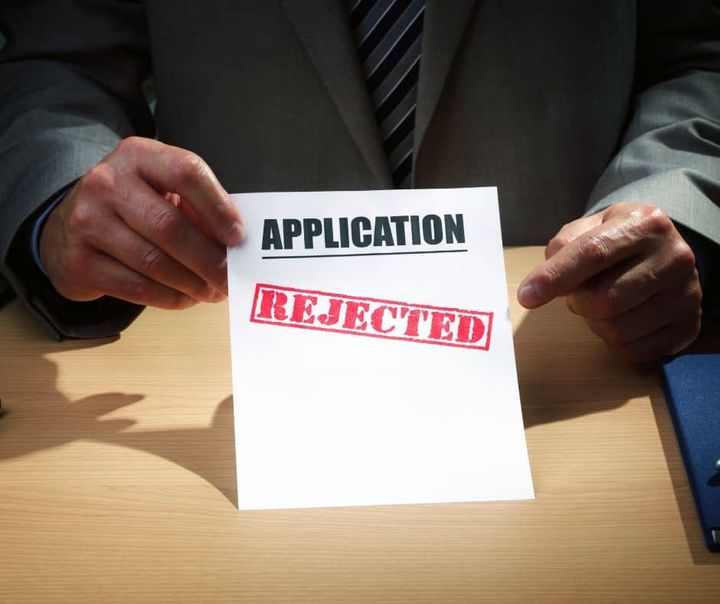
Will ICA Reconsider Past Rejected Citizenship Applications?
In February 2026, DPM Gan Kim Yong said the Government is keeping all options open on reviewing previously rejected citizenship applicants. Here is an honest reading of what that means, and how a rejected applicant can strengthen a fresh application.
Last updated: 21 July 2026
Written by the Singapore Top Immigration editorial team. Reviewed for policy accuracy against official sources (population.gov.sg, ICA/ask.gov.sg).
In February 2026, Deputy Prime Minister Gan Kim Yong said something that caught the attention of every foreigner who had ever been turned down for Singapore citizenship. Asked in Parliament whether the Government would take a fresh look at previously unsuccessful applicants who may since have assimilated, his short answer was: yes, the Government is keeping "all options open." That single line has fuelled a wave of hope, and a fair amount of confusion, around Singapore citizenship reconsideration in 2026.
So does this mean the Immigration & Checkpoints Authority (ICA) will reopen your old, rejected file? Not exactly. The honest reading is more measured: the Government has signalled a willingness to review, not promised an automatic re-do of every past case. Below, we set out what was actually said, what it does and does not mean for your odds, and how a previously rejected applicant can realistically strengthen a fresh application.
What DPM Gan Kim Yong actually said
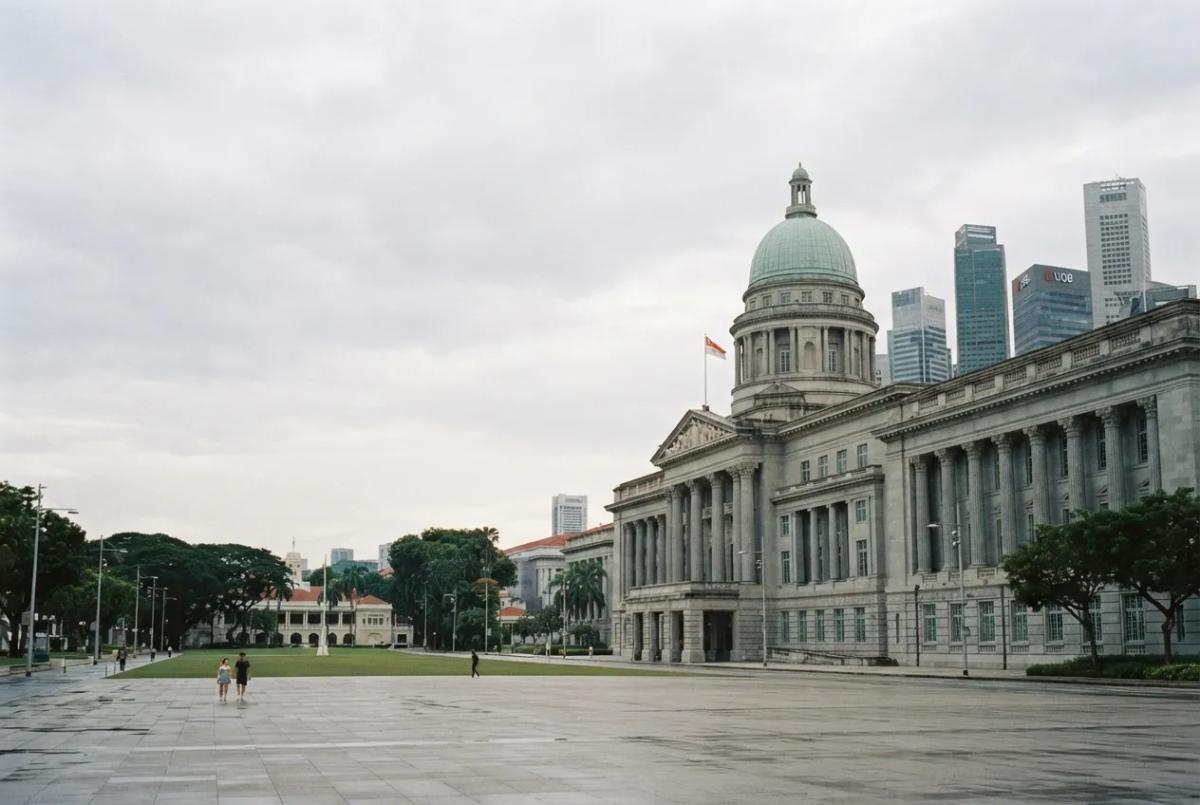
The remark came during the Committee of Supply (COS) debate in Parliament on 26 February 2026, as part of the annual population update delivered by DPM Gan Kim Yong, who oversees the National Population and Talent Division.
During the debate, a Member of Parliament asked whether the Government would consider applicants who had previously been unsuccessful but who may since have put down roots and assimilated into Singapore society. DPM Gan's reply was that "the short answer is yes, we are keeping all options open."
That is the sentence doing all the heavy lifting in the headlines. But he did not stop there. He also made two important qualifications in the same breath: some applicants had not been granted permanent residence (PR) or citizenship previously "for specific reasons," and assimilability, or how well someone can fit into and integrate with Singapore society, remains the key consideration. The Government also intends to keep Singapore's broad ethnic composition in balance.
Read in full, this is not a promise to reopen closed files. It is an acknowledgement that circumstances change, and that the door is not permanently shut on people who were once turned down. You can read the full statement in the official COS 2026 speech transcript on the population.gov.sg website.
The bigger picture: why Singapore is widening its intake
To understand why this came up at all, you have to look at the demographic backdrop the Government laid out on the same day.
The numbers are stark. Singapore's resident total fertility rate (TFR) for 2025 was a preliminary 0.87, down from 0.97 the year before, and well below the 1.24 recorded a decade ago. Around 27,500 resident babies were born in 2025, the lowest figure in the country's recorded history. Meanwhile, the population is ageing quickly: one in five citizens was aged 65 or older in 2025, compared with one in eight back in 2015.
Left unchecked, the citizen population would start to shrink in the early 2040s. Citizen population growth has already been slowing, from 0.9% a year between 2015 and 2020, to 0.8% in the following five years, to 0.7% last year, and it is expected to ease further to around 0.5% going forward.
To slow that decline, the Government set out its immigration settings for the next five years:
- New citizens: around 25,000 were granted citizenship last year, and the target is to take in 25,000 to 30,000 new citizens a year over the next five years, depending on the fertility rate and demographic trends.
- Permanent residents: the PR population is stable at around 540,000. About 35,000 PRs were granted last year, with an estimated intake of roughly 40,000 PRs a year going forward.
At a glance, here is how the announced settings compare with the most recent year:
- New citizens granted: around 25,000 last year, rising to a target of 25,000 to 30,000 a year for 2026 to 2030.
- New PRs granted: about 35,000 last year, with an estimated 40,000 a year going forward.
- PR population: around 540,000, and broadly stable.
- Citizen population growth: about 0.7% last year, easing to around 0.5% a year.
The Government said it will review these settings again by 2030. (All figures are drawn from the 26 February 2026 COS speech.)
So does a bigger intake improve your personal odds? A little, perhaps, but do not overread it. A wider intake band means more places overall, but it does not lower the bar for any individual application. ICA still assesses each applicant on the same merits. The extra headroom helps at the margins; it is not a green light.
An honest reading: willingness to review is not automatic reconsideration
This is the part that most of the excited commentary online glosses over, so it is worth stating plainly.
DPM Gan's answer was a signal, not a policy switch. Nothing in the statement says ICA will trawl through old rejection files and reassess them. Nothing changes the day-to-day criteria that ICA applies. And nothing overrides the "specific reasons" some people were declined in the first place.
The counter-view, which is the more accurate one, is that the assessment standard is unchanged. Assimilability, family ties, economic contribution and commitment to Singapore are still the things ICA weighs. If you were rejected and your situation has not changed, a fresh application is likely to produce the same result. The Feb 2026 remark is best understood as reassurance that a past "no" is not necessarily a permanent one, rather than a new fast-track for anyone who reapplies.
If your circumstances have genuinely shifted, this is an encouraging environment to try again. If they have not, the honest advice is to build a stronger case first. For the wider context on how the population strategy connects to citizenship policy, see our explainer on population policy and citizenship.
Does ICA reconsider citizenship applications? What assimilation and the assessment factors mean
ICA does not publish a scorecard, but it is transparent about the broad factors it weighs. According to ICA's official guidance on ask.gov.sg, citizenship applications are assessed on, among other factors:

- Family ties to Singaporeans: a spouse, children or close relatives who are citizens.
- Economic contributions: your employment, income, skills and how you contribute to the economy.
- Length of residency: how long you have lived in Singapore, usually as a PR.
- Ability to contribute to and integrate into Singapore: your capacity to assimilate.
- Commitment to sink roots: a genuine, long-term intent to make Singapore your home.
"Assimilation" is the one people find hardest to pin down, because it is not a single document. It is the accumulated evidence that you are part of the community: involvement in your neighbourhood, volunteering, participation in local activities, friendships and networks here, and a demonstrated intention to stay rather than treat Singapore as a temporary base. The Government has been actively building integration pathways too, including the Singapore Citizenship Journey programme for new citizens and a new PR Journey programme being scaled up.
One point ICA is clear about: resubmitting the same application will not change the result. Its guidance states that the outcome "will remain the same if there are no changes to your circumstances, and if the same information or documents are submitted." In other words, reconsideration hinges on new facts, not on asking again. If you want a fuller grounding in how eligibility and these factors fit together, our full Singapore citizenship guide is the best place to start.
Can you reapply after a rejection? Appeal versus a fresh application
Yes, a rejection is not the end of the road. But it is worth understanding the two routes and when each applies, because choosing the wrong one can waste months.
An appeal is the narrower route. An appeal asks ICA to review the same rejected application, so it only makes sense where something material has genuinely changed since you submitted, or where you can show ICA overlooked material facts. Industry practice, reflected on the major consultancy sites, is that an appeal should be lodged within about six months of the rejection letter and that only one appeal is generally entertained per rejection. Because an appeal does not reset the clock or add much new evidence, it is best reserved for cases with a clear, documentable change, such as a major promotion, a new Singaporean spouse or child, or property purchase, rather than as a routine second bite. (ICA does not publish a fixed appeal window, so treat the six-month and single-appeal figures as widely followed guidance rather than a stated rule, and check the wording of your own rejection letter.)
A fresh application is the main path. ICA's own guidance says that "if there are additional or updated information or documents since your last application, you may consider submitting a fresh application online." The trigger is new information: a change in your circumstances that materially strengthens your case. Because of this, applicants are generally advised to wait until their situation has meaningfully improved before reapplying, and industry practice is to allow at least around six months so that there is something new to show. (ICA frames the timing around changed circumstances rather than a fixed published waiting period, so treat the six-month figure as general guidance, not a hard rule.)
The application fee is S$100 per applicant, payable at submission and non-refundable regardless of the outcome. If approved, there are further fees on collection: S$70 for the Citizenship Certificate and S$10 for the identity card.
For a step-by-step look at reapplying and appealing, our guide on whether to appeal your rejection or reapply walks through the decision, and our companion piece on what to do when your Singapore citizenship application is rejected covers the common reasons behind a "no."
Appeal, reapply now, or wait? A quick decision guide
Use this as a rough starting point, not a substitute for a proper case review:
After a rejection
| Your situation since the rejection | Most sensible move |
|---|---|
| A major, documentable change just happened (promotion, new Singaporean spouse or child, property purchase) and you are still within a few months of the rejection | Consider an appeal on the strength of that specific change |
| Your profile has genuinely improved over time (more years as a PR, stronger income, deeper community involvement) | Submit a fresh application presenting the new evidence |
| Little has changed, or you were told there were specific reasons you have not yet addressed | Wait and build your case; reapplying unchanged will likely produce the same result |
| You are unsure what fell short last time | Get a professional review before deciding |
How to strengthen a fresh application
If you plan to try again, the goal is simple: give ICA something it did not have before. Here is where previously rejected applicants can make the biggest difference.

Show integration, not merely the intention to integrate. Concrete evidence beats declarations. Volunteering with a grassroots organisation, involvement in community or religious groups, coaching, or sustained participation in local activities all help demonstrate that you have put down roots. Keep records: dates, roles, letters of appreciation.
Improve your economic contribution. A promotion, a salary increase, a career move into a needed sector, or new professional qualifications all signal that your value to Singapore has grown since your last application. Stability matters as much as size; a steady, upward trajectory reads well.
Deepen family and community ties. Marriage to a Singaporean, the birth of a Singaporean child, or a Singaporean parent you support all strengthen the picture. So does a longer stretch of years as a PR, which shows commitment rather than a short-term stay.
Tip: Before you resubmit, look hard at your last rejection and ask what has actually changed on paper since then. If the honest answer is "not much," your time is better spent building the evidence than filing again straight away.
Managing expectations: no guarantees
It would be dishonest to promise that the February 2026 remark has changed your odds. Nothing ICA published in the wake of that statement lowers the bar or reopens closed files by default, and the "specific reasons" behind a past rejection still matter. A stronger case improves your chances; it does not guarantee an approval, and the decision remains entirely at ICA's discretion.
Two other things are worth keeping in view. First, Singapore does not generally recognise dual citizenship, so an approval will usually require you to renounce your current one. If that is a live concern for you, our FAQs on renouncing Singapore citizenship set out how that works. Second, this is a policy space that can shift. The Government said it will review its immigration settings again by 2030, so treat the current numbers as a snapshot rather than a fixed rule.
If you were turned down before and your situation has genuinely moved on, this is a reasonable moment to try again with a well-prepared, honest application. If it has not, the better use of your time is to close the gaps first. Either way, a professional review of what fell short last time is usually money well spent. If you would like a second pair of eyes on your case, our team can help through our Singapore citizenship service.
Frequently asked questions
Can I reapply for Singapore citizenship after a rejection?
Yes. A rejection does not bar you from applying again. ICA's own guidance says that if there is additional or updated information since your last application, you may submit a fresh application online. The key is new information: if your circumstances have not changed, ICA has said the outcome will be the same, so it is worth waiting until you have something new to show.
Does ICA reconsider citizenship applications?
ICA does not automatically reopen or re-score old, rejected files. What DPM Gan Kim Yong signalled in February 2026 was a willingness to consider previously unsuccessful applicants who may since have assimilated, not a blanket reconsideration. In practice, "reconsideration" happens through a fresh application or an appeal, both of which turn on a genuine change in your circumstances rather than simply asking again.
How long should I wait before reapplying for Singapore citizenship after a rejection?
ICA frames the timing around changed circumstances rather than a fixed waiting period, so there is no official minimum. Industry practice is to allow at least around six months, and often longer, so that there is real new evidence to present, such as more years as a PR, a stronger income or deeper community ties. Reapplying too soon with the same profile tends to produce the same result. Treat the six-month figure as general guidance, not a hard rule.
How much does it cost to reapply for Singapore citizenship?
The application fee is S$100 per applicant, payable at submission and non-refundable whatever the outcome. If your application is approved, there are further fees on collection: S$70 for the Citizenship Certificate and S$10 for the identity card.
This article is for general information only and does not constitute immigration or legal advice. Policy settings and figures are drawn from the 26 February 2026 Committee of Supply population update and ICA's published guidance, current as at the last-updated date above. It is reviewed quarterly; check official sources (population.gov.sg, ica.gov.sg, ask.gov.sg) or seek professional advice before acting on your own case.
Go Deeper
Related Guides
Definitive Singapore Citizenship Application Guide 2026
Complete guide to Singapore citizenship application in 2026. Covers eligibility pathways, ICA assessment factors, required documents, step-by-step process, fees, processing times, and the February 2026 policy update on increased intake.
Keep Reading