

Immigration Policy
Singapore PR Approvals Hit a 14-Year High: What the 2025 Statistics Mean for 2026 Applicants
Singapore granted 35,264 new PRs in 2024, the highest since 2010. Here's what the record PR statistics really mean for your 2026 application, and what they don't.
Last updated: 10 July 2026 · By the Singapore Top Immigration editorial team · Reviewed against primary Government sources (see references)
Singapore granted 35,264 new Permanent Residencies in 2024, the highest annual figure the country has recorded since 2010. Alongside that, 22,766 people became new Singapore citizens in the same year. Those two numbers, published in the government's Population in Brief 2025 report, are why you will see so many headlines calling this a "14-year high" for Singapore PR approvals.
If you are planning to apply in 2026, the obvious question is whether a record number of approvals means it is now easier to get your PR. The honest answer takes some unpacking. More grants is encouraging, but the volume tells you far less about your personal odds than most articles imply. This piece works through the actual figures, the ten-to-fourteen-year trend behind them, the 2024 profile of who is getting approved, and what all of it does, and does not, mean for your application timing this year.

Every statistic here traces back to official sources: the National Population and Talent Division's Population in Brief 2025, the Immigration and Checkpoints Authority (ICA), the Ministry of Home Affairs (MHA), and the Department of Statistics (SingStat). No invented percentages, no borrowed guesses.
How many PRs does Singapore actually approve?
Here are the headline figures for 2024, the most recent full year with official actuals, drawn directly from Population in Brief 2025. Singapore granted 35,264 new Permanent Residencies and 22,766 new citizenships (excluding citizenships by descent), with a further 1,409 citizenships by descent reported separately. As of June 2025 the PR population stood at about 543,800 (roughly 0.54 million), the citizen population at 3.66 million, and the total population at 6.11 million, up 1.2 per cent year-on-year.
A few points of precision most competitor articles miss. First, the 22,766 new citizenships figure now excludes citizenships by descent. The 1,409 children born overseas to Singaporean parents who registered as citizens are reported separately in the 2025 edition, a recent change that matters if you want to compare year against year cleanly. Second, notice what is not on this list: an "approval rate." We will come back to that, because it is the single biggest misconception in this topic.
The 35,264 PR grants is the number doing the heavy lifting in the "14-year high" framing. To be exact about it: Population in Brief 2025 does not itself use the phrase "14-year high." It reports 35,264 as the largest annual intake since 2010. Because 2010 is fourteen years before 2024, the media and immigration consultants have condensed that into "14-year high." It is defensible shorthand, but the honest wording is "the highest annual PR figure since 2010."
The 10 to 14-year trend: how PR approvals reached a 14-year high
A single year in isolation is easy to sensationalise. The multi-year trend is more useful, and Singapore's numbers show steady recovery rather than a sudden spike. New PR grants ran at 27,470 in 2020 (suppressed by pandemic border restrictions and processing slowdowns), then 33,435 in 2021, 34,493 in 2022, 34,491 in 2023, and 35,264 in 2024. From 2021 onward the annual intake settled into the low-to-mid 34,000s, and 2024 nudged that up to 35,264. This is a gentle upward drift, not a floodgate opening.
A 14-year high
| Year | New PRs granted | Note |
|---|---|---|
| 2020 | 27,470 | COVID-19 dip |
| 2021 | 33,435 | Recovery |
| 2022 | 34,493 | Steady |
| 2023 | 34,491 | Steady |
| 2024 | 35,264 | Highest annual PR intake since 2010 |
Population in Brief 2025 also gives the cleaner five-year-average comparison, which smooths out the year-to-year noise. Over 2015 to 2019 the intake averaged about 31,700 new PRs and 20,500 new citizens a year; over 2020 to 2024 it averaged about 33,000 new PRs and 21,300 new citizens. So over the past decade the average annual PR intake rose from roughly 31,700 to roughly 33,000, an increase of about four per cent across two five-year blocks. Meaningful, but hardly dramatic.
The "14-year" reference points back to the pre-tightening era. In 2009, Singapore granted around 59,460 PRs. From 2010 the government held annual grants to roughly 30,000 following a deliberate policy tightening, and they have stayed in that band since. In other words, today's "record since 2010" sits well below the pre-tightening peak. The country has recovered to its highest post-tightening level, not returned to an era of open-door intake.
Is there a "Singapore PR approval rate"?
This is the most common search-driven misconception, so it is worth correcting head on. Many people type "singapore pr approval rate 2025" into Google expecting a percentage, some figure like "48% of applications were approved." No such official statistic exists.
ICA does not publish the number of PR applications received, so no one outside the authority can calculate an approvals-divided-by-applications percentage. What the government publishes is a count of grants (the 35,264), not a rate. Any website quoting a specific "approval rate" percentage is either estimating it informally or presenting a number it cannot source. If you see a precise approval-rate figure attributed to ICA, treat it with scepticism.
What ICA has confirmed about how it assesses applications is qualitative, not quantitative. Grants are based on "the number and quality of applications received and our changing needs." There is no fixed annual quota that fills up, and the assessment is made case by case. That is genuinely useful to know, because it means your application is judged on its own merits rather than against a countdown of remaining slots.
It is also worth a sanity check on the "success rate" claims some sites advertise, 90% or more. Set those against the published figures and they strain belief. Singapore grants roughly 35,000 PRs a year, yet the eligible pool is far larger, drawn from the hundreds of thousands of Employment Pass and S Pass holders alone, before you add spouses, students, aged parents and investors. Even without an official denominator, grants clearly go to a selected minority, not the overwhelming majority. Treat any specific national "approval rate" as an estimate, and treat a headline 90%-plus claim with real caution.
Tip: If a consultant quotes you a precise "Singapore PR approval rate 2025", ask where the application count comes from. ICA does not release it, so the figure cannot be sourced.
The PR paradox: why a record intake doesn't mean a bigger pool
Here is a detail that surprises many applicants. Even though 2024 saw a 14-year high in PR grants, Singapore's total PR population is not growing. As of June 2025 there were about 543,800 PRs, slightly down from 544,900 a year earlier.
How can record grants coincide with a shrinking pool? The PR population works on a replacement model. Every year, some PRs move on to become citizens (all new adult citizens come from the existing PR pool, since PR is the mandatory step before citizenship), some emigrate, and some let their status lapse. The roughly 35,000 new grants each year are largely refilling those departures rather than expanding the total.
The government has been explicit that immigration is meant to moderate the impact of ageing and low birth rates, keeping the citizen population from shrinking over the long term, rather than to grow the resident base aggressively. With the resident total fertility rate at 0.97 in 2024 and the citizen median age at 43.7, the intake is essentially demographic maintenance. This matters for applicants because it reframes the "record high": it is a steady replacement flow, which is exactly why the bar has not dropped. For the fuller demographic picture behind these decisions, see our overview of Singapore's population policy and citizenship.
Who gets approved? The 2024 profile of new PRs and new citizens
This is where our data beats the field. Many competitor articles still quote the 2023 profile figures. The official Population in Brief 2025 publishes the 2024 profile in its Table 17, and the picture has shifted. By age, 24.8% of new PRs were aged 20 and below, 32.6% aged 21 to 30, 31.4% aged 31 to 40, and 11.3% above 40; among new citizens the split was 29.9%, 14.3%, 28.5% and 27.4% across the same bands. By qualification, 85.5% of new PRs (aged 20 and above) held a post-secondary qualification, against 81.1% of new citizens. By region of origin, 63.9% of new PRs were of Southeast Asian origin, 29.6% other Asian, and 6.5% others; new citizens broke down as 64.3%, 32.8% and 2.9%.
A few patterns worth pulling out. Around 64% of new PRs are aged 21 to 40, prime working age, the band most able to contribute economically over a long horizon. 85.5% hold a post-secondary qualification, which shows how much education and skills weigh in the assessment. And roughly 93.5% are of Asian origin, with Southeast Asians the single largest group at 63.9%.
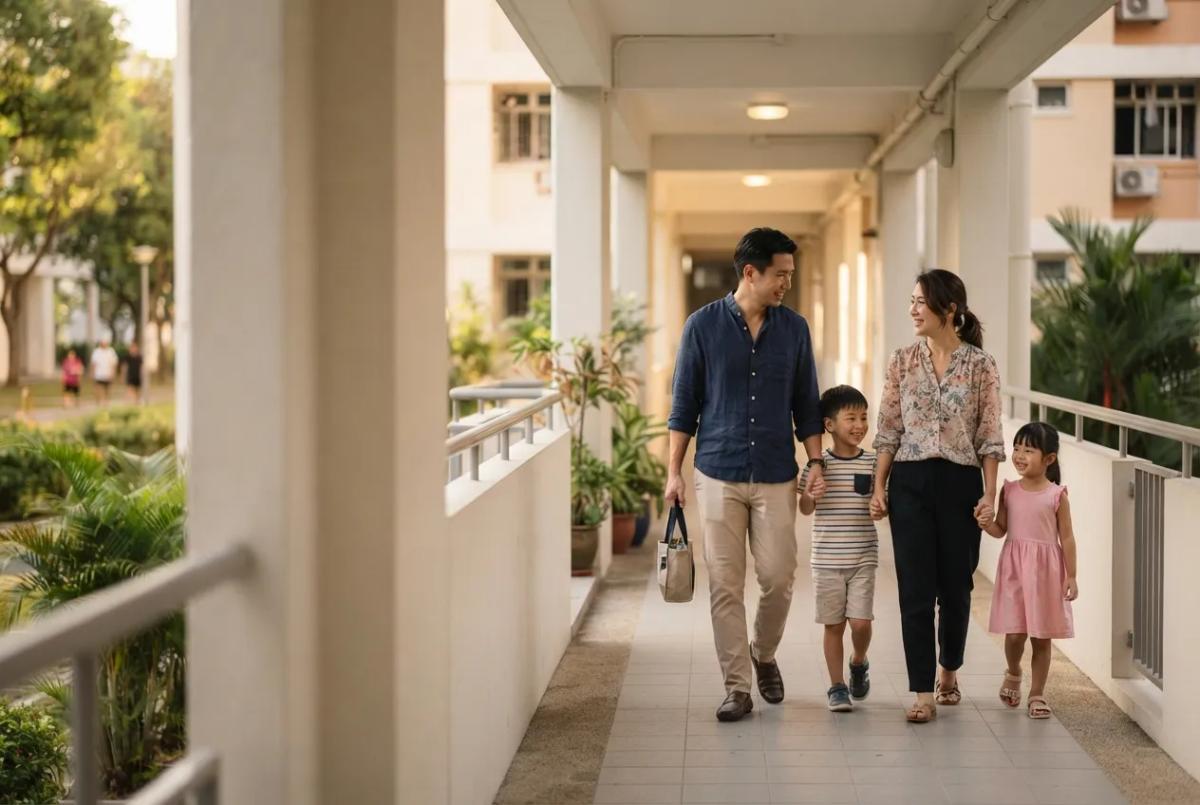
Read carefully, this profile is a proxy for what ICA appears to value: economic contribution and long-run integration. Younger, qualified applicants in employment sit squarely in the majority. That does not mean older or less-credentialed applicants are shut out, since over a quarter of new citizens were above 40, but it does show where the centre of gravity is. Family nucleus also plays a visible role. The substantial 24.8% share aged 20 and below reflects children being granted PR alongside their parents, which is consistent with ICA's stated preference for applicants who show genuine roots and family commitment in Singapore.
Alongside the profile data, the government has been unusually specific about which sectors the intake is meant to serve. In its 2025 commentary, officials pointed to granting PR to healthcare workers to support an ageing population and to construction workers to keep major infrastructure projects moving. That does not mean only those fields are welcome, since the age and qualification profile above is broad, but it is a clear signal that applicants who can frame their work against a named national need are speaking ICA's language.
What higher volume does, and doesn't, mean for your odds
The question most applicants actually have deserves a direct answer. A 14-year high in approvals does not mean the individual bar has been lowered.
Because ICA does not run to a quota and weighs each case on its merits, a bigger total intake mostly reflects a larger, stronger pool of applicants plus the country's replacement needs, not a relaxation of standards. Your application is still weighed on your own economic contribution, qualifications, length and stability of stay, family ties, and how well your profile fits Singapore's needs. Extra grants nationally do nothing for you if your own case is weak.
If anything, the healthy volume is a reason to apply well rather than to apply casually. A strong environment rewards strong applications and still rejects thin ones. Treating the record number as a green light to submit an underprepared application is exactly the complacency this data should not encourage.
For a grounded sense of what actually moves the needle, our guide on PR application success factors and the reality of how salary affects your PR approval are more useful than any national headline figure.
Reading the statistics without complacency
It is worth naming the trap plainly. "Record approvals" is a comforting phrase, and consultants use it to generate urgency. But the same dataset that shows 35,264 grants also shows a PR pool that is flat, an intake that is demographic replacement, and a profile skewed towards strong economic contributors.
None of that describes an easy environment. It describes a stable, selective one. Applications still get rejected, whether for weak documentation, an unconvincing employment record, gaps in the profile, or simply an application that does not tell a coherent story of contribution and commitment. If you want to understand the failure modes before you submit, read our breakdown of common PR rejection reasons and how to avoid them. The statistics are a backdrop, not a promise.
There is also a policy signal pointing the same way. From December 2025, the rules around the Re-Entry Permit that lets a PR keep their status while abroad were tightened. That change signals the government wants PRs who actually live and put down roots here rather than hold the status passively. The direction of travel is clear: the bar is on commitment and contribution, not volume.
Actionable 2026 application-timing advice
So what should you actually do with this in 2026? A few practical takeaways.

First, the environment is favourable enough that there is no reason to wait for some future "better year." Intake has been steady in the mid-30,000s for four years running, and the government's own forward guidance (from the February 2026 population update) points to a planning range of around 40,000 PRs a year for 2026–2030. Waiting on the hope of a quota surge is not a strategy, because the flow is deliberately kept stable.
Tip: Read the Singapore PR statistics for 2026 as a green light on the environment, not on your file. A record intake helps nobody whose own case is thin.
Second, timing matters most at the individual level, not the national one. The strongest moment to apply is when your own profile is at its best: a stable job, a clear upward trajectory, sufficient time on your current pass, and a well-documented employment and financial record. If you are on an Employment Pass eyeing the transition, our EP-to-PR pathway guide walks through the readiness checks, and how long to wait before applying for PR covers the tenure question directly.
Third, prepare as if the bar is high, because it is. Work through the PR Application Guide end to end, and assemble everything against the PR Application Checklist before you submit. If you are applying as a family, securing PR as a whole family covers the nuances of a joint application, which the 2024 age profile shows is a common and well-supported route.
Frequently Asked Questions
What is the Singapore PR approval rate for 2025?
There is no official Singapore PR approval rate. ICA publishes the number of PRs granted, not a percentage of applications approved, because it does not release the total number of applications received. The most recent official figure is 35,264 new PRs granted in 2024 (Population in Brief 2025). Any specific "approval rate" percentage you see quoted is an informal estimate, not an ICA statistic. As a sanity check: with around 35,000 grants a year against an eligible pool of hundreds of thousands of pass holders and their families, a national rate above 90% is not credible. Grants clearly go to a selected minority, which is why claims of near-guaranteed approval should be treated with caution.
How many PRs does Singapore approve each year?
Singapore granted 35,264 new Permanent Residencies in 2024, the most recent year with official actuals (Population in Brief 2025). Annual PR grants have held in the mid-30,000s for several years: 33,435 in 2021, 34,493 in 2022 and 34,491 in 2023, up from a COVID-suppressed 27,470 in 2020. The five-year average for 2020–2024 was about 33,000 PRs a year. Looking ahead, the government indicated in its February 2026 population update that it plans to grant around 40,000 PRs a year over 2026–2030.
What do the Singapore PR statistics tell us for 2026?
Three things stand out for 2026 applicants. First, intake is stable and healthy: mid-30,000s PR grants for four straight years, with official forward guidance pointing to around 40,000 a year through 2030. Second, a record grant count has not enlarged the PR pool, which stayed flat at about 543,800 in June 2025, because grants mainly replace PRs who convert to citizenship, emigrate or lapse. Third, the 2024 profile shows who ICA tends to approve: roughly 64% of new PRs are aged 21–40 and 85.5% hold a post-secondary qualification. The practical read for 2026 is that the environment is favourable but selective, so the statistics are a reason to apply with a strong, well-documented case rather than to assume approval is easy.
Sources: All figures are drawn from official primary sources: Population in Brief 2025 (National Population and Talent Division, SingStat, MHA, ICA, MOM; published September 2025); the SingStat / data.gov.sg dataset on citizenships and PRs granted; and the National Population and Talent Division February 2026 population update.
Go Deeper
Related Guides
Definitive Singapore PR Application Guide 2026
Complete guide to applying for Singapore Permanent Residence in 2026. Covers all 7 eligibility categories, required documents, step-by-step ICA e-Service process, fees, processing timeline, and what to do after approval.
PR Application Checklist 2026: Complete Document Guide by Scheme
Complete checklist of documents needed for Singapore PR application in 2026 — PTS and sponsored applicants — with preparation tips and submission steps


Keep Reading
Related Posts
Singapore PR Application Success Factors (Updated for 2026)
Discover what ICA really looks for in PR applications. Learn the 6 key assessment factors, success strategies, and what applicants commonly overlook.
Singapore PR Rejection Reasons & How to Avoid Them
Understand the 10 most common reasons PR applications are rejected in Singapore and learn specific strategies to fix each issue before reapplying.