
Immigration Policy
CECA Singapore Explained: What the India-Singapore Agreement Means for Immigration in 2026
What CECA actually covers, what it does not, and what it means for PR and citizenship applicants in Singapore. Seven myths debunked with official sources.
Last updated: March 2026
Few trade agreements in Singapore's history have sparked as much public discussion as CECA. Search "CECA Singapore" and you will find everything from parliamentary debates to Reddit threads to viral social media posts. But for anyone actually navigating the immigration system here, whether applying for a work pass, considering PR, or planning long-term relocation, the gap between what CECA actually does and what people think it does can lead to real confusion and bad decisions.
This guide breaks down what CECA covers, what it does not cover, how it affects work passes in practice, and what it means (and does not mean) for PR and citizenship applicants in Singapore. Every claim here is sourced from the agreement text, government statements, or official data.
What is CECA?
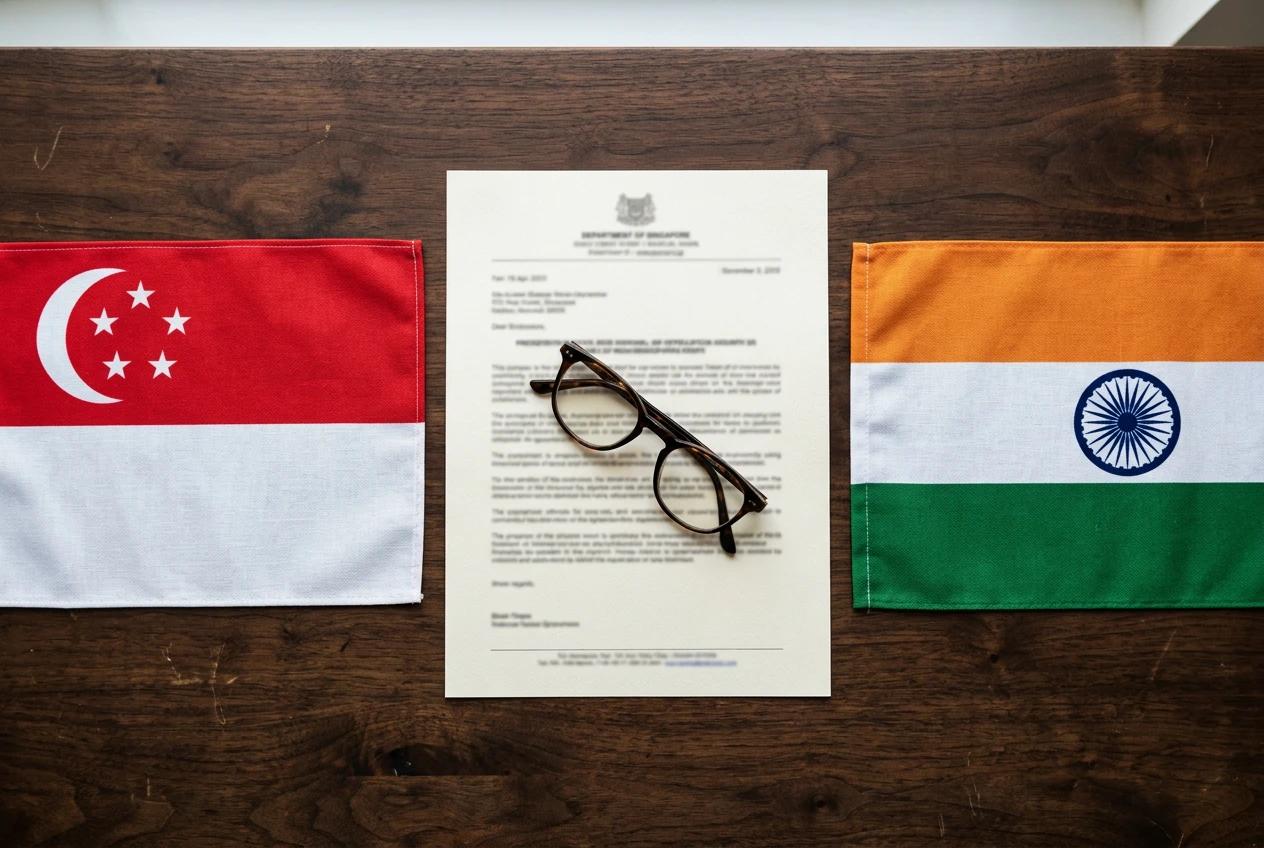
CECA stands for Comprehensive Economic Cooperation Agreement. It is a bilateral free trade agreement between Singapore and India, signed on 29 June 2005. The agreement entered into force the same year, making it Singapore's first comprehensive trade deal with a South Asian country.
The full agreement spans 16 chapters covering trade in goods, trade in services, investment protection, movement of natural persons (Chapter 9), customs procedures, intellectual property, dispute settlement, competition, telecommunications, science and technology cooperation, education, media, and mutual recognition of standards. The Mutual Recognition Agreements (MRAs) allow professional qualifications in fields like accounting, healthcare, and engineering to be recognised across both countries, simplifying the exchange of expertise.
Singapore has signed 27 free trade agreements in total, covering countries that account for more than 85% of global GDP. CECA is one of these 27 agreements. It is not unique in its structure or scope, though it is arguably the most publicly discussed.
Why does CECA exist?
India is a large and fast-growing market. When CECA was signed in 2005, Singapore wanted preferential access for its service providers and investors in sectors like banking, telecommunications, engineering, and real estate development. India wanted access to Southeast Asian markets and investment from Singapore, one of Asia's major financial centres.
The agreement eliminated tariffs on 81% of Singapore's exports to India, with more than 3,000 tariff lines reduced to zero and another 2,000-plus reduced. It also gave Singapore-based companies preferential access to India's services sector and provided investment protection mechanisms for businesses operating across both countries.
From India's perspective, Singapore offered a gateway to the broader ASEAN region and a stable legal environment for business operations. The Double Taxation Avoidance Agreement (DTAA) provisions within CECA made Singapore an attractive base for Indian companies looking to structure their regional operations, though the DTAA has been amended several times since then.
How much trade does CECA facilitate?

The trade data since 2005 speaks for itself:
Singapore-India Under CECA
Bilateral trade and investment at a glance
US$34.3B
Bilateral trade FY 2024-25 (up from $6.7B pre-CECA)
US$174.9B
Cumulative Singapore FDI into India (24% of India's total)
27.8%
India's ASEAN trade that goes through Singapore
3,000+
Tariff lines eliminated under CECA
Sources: Dept of Commerce India, High Commission of India Singapore, Enterprise Singapore
Singapore is India's largest trading partner within ASEAN, accounting for 27.8% of India's total ASEAN trade in FY 2024-25. In investment terms, Singapore is the leading source of foreign direct investment into India, with cumulative FDI of approximately $174.9 billion over the past 25 years, representing nearly 24% of India's total FDI inflows. In FY 2024-25 alone, Singapore invested approximately $14.9 billion into India.
These are big numbers. But for someone wondering how CECA affects their own situation in Singapore, the trade statistics are less important than the specific provisions on work passes and immigration, which is where most of the public confusion sits.
CECA and work passes: what chapter 9 actually says
Chapter 9 of CECA is titled "Movement of Natural Persons." This is the chapter that generates the most discussion. Here is what it actually covers, and what it does not.
Who does chapter 9 apply to?
Chapter 9 provides streamlined entry for two specific categories of people:
Intra-corporate transferees (ICTs): Employees being transferred within the same multinational company from an office in India to an office in Singapore. These are people who already work for the company and are being reassigned, not new hires from the external job market.
Business visitors: People entering Singapore for short-term business activities such as meetings, contract negotiations, trade fair attendance, or after-sales service. Business visitors do not take up employment in Singapore.
Annex 9A of the agreement lists 127 job categories that qualify for streamlined ICT entry. These cover a wide range of professions: IT professionals, architects, civil engineers, electrical engineers, doctors, biochemists, pharmacists, lecturers, accountants, auditors, financial analysts, psychologists, career advisors, and many others.
What "streamlined entry" means (and does not mean)
This is where the misconception takes hold. The 127 categories in Annex 9A do not create a right to work in Singapore. They describe which types of professionals may apply for facilitated processing of their work pass applications. Every Indian professional covered by CECA still needs to:
- Hold a valid Employment Pass, S Pass, or other work authorisation issued by MOM
- Meet the prevailing salary thresholds for their pass type
- Pass the COMPASS points-based assessment (for EP holders, from September 2023 onward)
- Have a sponsoring employer in Singapore who files the application
The Singapore government has been explicit about this point. In a July 2021 parliamentary statement, then-Manpower Minister Tan See Leng stated that nothing in CECA implies Indian nationals get jobs in Singapore unconditionally. The list of 127 categories shows who may apply; it does not require MOM to approve.
In practice, "streamlined" means faster administrative processing of the application, not a lower bar for approval. The same salary, qualification, and employer-based criteria that apply to every other foreign professional also apply to CECA-covered applicants.
How current work pass rules apply to everyone, including CECA applicants
Singapore's work pass framework is much stricter now than when CECA was signed in 2005. These rules apply regardless of whether someone enters under a CECA provision or not.
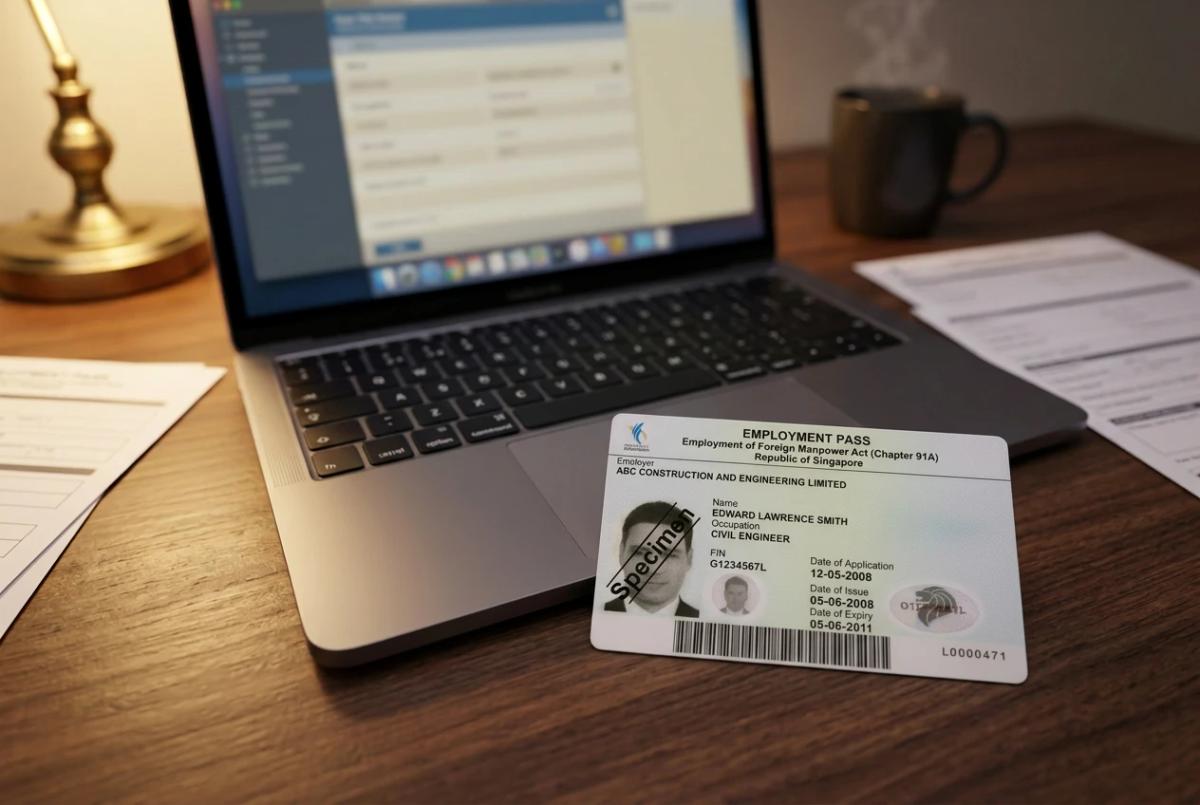
Employment Pass (EP) requirements as of 2025-2026:
Work Pass Requirements
| Pass type | Minimum salary 2025 | Minimum salary 2027 |
|---|---|---|
| Employment Pass (general) | S$5,600/month | S$6,000/month |
| Employment Pass (financial services) | S$6,200/month | S$6,600/month |
| EP older candidates (45+, general) | Up to S$10,700/month | Up to S$11,500/month |
| S Pass (general) | S$3,300/month | S$3,600/month |
| S Pass (financial services) | S$3,800/month | S$4,000/month |
| COMPASS score | Minimum 40 points | Minimum 40 points |
COMPASS evaluation criteria:
The Complementarity Assessment Framework (COMPASS) scores EP applications across four mandatory criteria and two bonus criteria:
COMPASS Framework
Six criteria that determine EP approval
Salary
Compared to 65th percentile of local PMET salaries in your sector
Qualifications
Points for degrees from top-tier institutions (list updated Nov 2025)
Diversity
Lower score if employer already has many staff from your nationality
Local employment
Employer's share of local PMETs vs industry benchmark
Skills bonus
Extra points for roles on the Shortage Occupation List
Strategic priorities
Extra points for roles meeting government economic goals
All six criteria apply equally to CECA and non-CECA EP applicants. Min. total: 40 points.
- C1 Salary: Points based on how your salary compares to the 65th percentile of local PMET salaries in your sector
- C2 Qualifications: Points for degrees from top-tier institutions (list updated November 2025)
- C3 Diversity: Points based on your nationality's representation in the employer's workforce. If your employer already has a high concentration of employees from your country, you score lower. This is the criterion most relevant to public concerns about nationality clustering at specific firms. If a company's workforce is already heavily weighted toward one nationality, each additional hire from that same country scores fewer diversity points, making EP approval harder. This applies to all nationalities, and it directly addresses the concern (common on forums like Reddit and HardwareZone) about departments becoming dominated by a single nationality
- C4 Support for local employment: Points based on the employer's share of local PMETs relative to industry benchmarks
- C5 Skills bonus: Extra points if the role is on the Shortage Occupation List
- C6 Strategic economic priorities bonus: Extra points for roles meeting specific government economic goals
S Pass requirements as of 2025-2026:
The minimum qualifying salary for S Pass holders is S$3,300 per month (S$3,800 for financial services), rising to S$3,600 and S$4,000 respectively from January 2027. S Pass holders are also subject to employer-level foreign worker quotas and levies that do not apply to EP holders.
The bottom line: work pass criteria in Singapore are the same for everyone. A software engineer from India applying under CECA provisions faces the same salary thresholds, COMPASS score requirements, and employer scrutiny as a software engineer from France, Brazil, or Japan. CECA streamlines the application process. It does not lower the bar.
Seven myths about CECA and immigration
CECA has been the subject of several persistent myths. Some of these were formally addressed during a July 2021 parliamentary debate, others in government factsheets. Here is what the evidence says.
Fact vs Fiction
Seven common misconceptions about CECA
"Automatic job access"
All workers still need valid MOM work passes
"Professional visa"
No separate CECA visa or pass type exists
"Unlimited workers"
No separate quota or channel exists under CECA
"PR/citizenship pathway"
CECA explicitly excludes PR and citizenship
"Dependants enter freely"
Dependants need their own valid passes to enter or work
"Cause of Indian workforce"
Driven by sector demand and talent supply, not CECA
"Only benefits India"
SG exports grew 5x; $174.9B invested in India
Myth 1: CECA gives Indian nationals automatic access to Singapore's job market
Reality: Every foreign professional needs a valid work pass from MOM, regardless of nationality or trade agreements. CECA does not override work pass requirements. The 127 job categories in Annex 9A identify which professions qualify for streamlined processing of intra-corporate transfer applications. The pass itself still has to be applied for and approved through normal channels. The government confirmed this in a 2021 factsheet published on gov.sg and in multiple parliamentary responses.
Myth 2: The 127 categories create a special "professional visa"
Reality: There is no separate visa or pass type created by CECA. The 127 categories in Annex 9A describe professions that qualify for facilitated ICT processing. These professionals still apply for the same Employment Pass that every other foreign professional uses, subject to the same salary thresholds and COMPASS criteria. The Straits Times and MOM have both confirmed there is no "CECA visa" or "CECA pass" in Singapore's work pass framework.
Myth 3: CECA allows unlimited numbers of Indian workers into Singapore
Reality: There is no quota or cap specific to CECA because CECA does not create a separate immigration channel. All work passes are subject to Singapore's existing workforce management framework, including EP qualifying salaries, COMPASS scores, S Pass quotas, and the Fair Consideration Framework. The total number of Employment Pass holders in Singapore is determined by employer demand and MOM's approval criteria, not by CECA.
Myth 4: CECA provides a pathway to PR or citizenship for Indian nationals
Reality: CECA explicitly does not apply to measures pertaining to citizenship, permanent residence, or employment on a permanent basis. This is stated in Article 9.1.2 of the agreement text itself. The Singapore government's ability to regulate immigration, including PR and citizenship decisions, is completely unaffected by CECA. No FTA that Singapore has signed makes any commitments relating to citizenship or permanent residency.
PR and citizenship applications from Indian nationals go through the same ICA assessment process as applications from any other nationality. There is no CECA-related preference, quota, or fast-track for PR or citizenship.
Myth 5: CECA obliges Singapore to let dependants of Indian workers enter and work freely
Reality: All work pass holders, regardless of nationality or trade agreement, need to meet MOM's prevailing criteria to bring in dependants. Dependants require their own valid passes (Dependant's Pass or Long-Term Visit Pass), and those who wish to work must apply separately for a Letter of Consent. CECA does not override any of these requirements. The dependant framework is the same for Indian, Chinese, Japanese, and every other nationality of EP or S Pass holder.
Myth 6: CECA is why there are so many Indian professionals in Singapore
Reality: The nationality composition of Singapore's workforce is driven by the sectors the economy focuses on and the global supply of workers with relevant skills, not by any single trade agreement. In 2020, Manpower Minister Tan See Leng told Parliament that Indian nationals made up about 25% of the 177,100 EP holders in Singapore, up from roughly 14% in 2005. But the top six EP nationalities (China, India, Japan, Malaysia, Philippines, UK) have remained consistent since 2005. The shift in India's share is driven by rapid growth in Singapore's digital economy and financial sector, where Indian professionals are heavily represented globally. India produces a large number of English-speaking professionals in technology, finance, engineering, and healthcare, and these happen to be the sectors where Singapore has the highest demand.
One statistic puts this in perspective: over the past decade, for every net additional skilled foreign worker, the Singapore economy added approximately ten skilled local PMET jobs. The foreign workforce is growing alongside local employment, not instead of it.
Myth 7: CECA only benefits India, not Singapore
Reality: The bilateral trade data shows it goes both ways. Singapore's exports to India have grown substantially since CECA took effect, with more than 3,000 tariff lines eliminated. Singapore service providers have preferential access to Indian markets in banking, telecommunications, and engineering. CECA also includes Mutual Recognition Agreements (MRAs) that recognise professional qualifications in fields like accounting, healthcare, and engineering, which benefits Singapore-based professionals seeking to operate in India. Singapore's cumulative investment in India exceeds $174.9 billion. The relationship is not one-directional, though the benefits flow through different channels for each country.
How CECA compares to Singapore's other FTAs
Singapore has 27 implemented free trade agreements. CECA is one of them. To understand whether CECA is unusual in its provisions, it helps to compare it with other major agreements.
FTA Comparison
| Feature | CECA (India) | CSFTA (China) | JSEPA (Japan) | KSFTA (Korea) | RCEP (15 countries) |
|---|---|---|---|---|---|
| Year in force | 2005 | 2009 | 2002 | 2006 | 2022 |
| Tariff reduction | 81% of SG exports | Progressive elimination | Substantial | Substantial | 92% within 20 years |
| Services market access | Yes | Yes | Yes | Yes | Yes |
| Movement of persons | Chapter 9 (ICTs, business visitors) | Annex on movement | Chapter 10 | Chapter 11 | Chapter 9 |
| ICT provisions | 127 categories | Yes, similar | Yes, similar | Yes, similar | Yes, broader |
| PR/citizenship commitments | None | None | None | None | None |
The movement-of-persons chapter in CECA is structurally similar to the equivalent chapters in Singapore's other major FTAs. The China-Singapore FTA (CSFTA), the Japan-Singapore Economic Partnership Agreement (JSEPA), and the Korea-Singapore FTA (KSFTA) all contain provisions for business visitors and intra-corporate transferees. None of these agreements commit Singapore to granting PR or citizenship to nationals of the partner country.
RCEP, which includes 15 countries covering 30% of global GDP, also has a Chapter 9 on movement of natural persons with similar ICT provisions but on a broader scale.
The difference in public attention comes down to context: the large number of Indian professionals in Singapore's tech and finance sectors makes CECA more visible than equivalent provisions in other agreements, even though the legal framework is similar.
What CECA means for PR applicants

If you are an Indian national working in Singapore and considering a PR application, CECA has no direct bearing on your application. Here is why, and what actually matters instead.
CECA does not affect your PR application
Your PR application is assessed by ICA, not MOM. ICA uses its own criteria: economic contribution, family ties, educational background, length of residency, age, community involvement, and how your profile fits Singapore's demographic needs. There is no field on the PR application form that asks about CECA, and there is no CECA-related pathway for PR.
Whether you entered Singapore under a CECA-covered ICT transfer or through a standard EP application makes no difference to ICA's assessment. Your work pass gets you residency in Singapore. Your PR application is a separate process based on separate criteria.
What actually matters for your PR application
The factors that matter are the same ones that apply to every nationality:
Salary and economic contribution. Higher salary signals higher economic value. ICA does not publish minimum salary requirements for PR, but industry patterns suggest that applicants earning significantly above the EP minimum have stronger outcomes.
Length of residency. Applicants who have lived and worked in Singapore for at least 2 to 3 years tend to have better outcomes than those who apply immediately after arriving, regardless of how they entered.
Employer profile. Working for an established Singapore-based company, especially one that hires Singaporeans, carries more weight than working for a company that primarily employs foreign nationals.
Family ties. Being married to a Singaporean citizen or PR, having children in Singapore schools, or having extended family here strengthens your application.
Tax contributions and CPF. A consistent record of tax payments and, after PR approval, CPF contributions demonstrates long-term commitment.
Community involvement. Volunteer work, grassroots participation, or community contributions show integration beyond just employment.
Educational qualifications. Degrees from well-regarded institutions are viewed favourably, though ICA looks at the full picture rather than any single factor.
For a detailed walkthrough of the PR process, including documents, timelines, and assessment factors, see our Singapore PR application guide.
What CECA means for citizenship applicants
Like PR, Singapore citizenship decisions are entirely outside the scope of CECA. The agreement explicitly excludes citizenship and permanent residence from its coverage.
If you are an Indian-origin PR considering citizenship, your application is assessed on the same criteria as every other PR applicant: length of PR residency (typically 2+ years minimum), economic contribution, family situation, NS obligations for male applicants, and overall integration into Singapore society.
The Deputy Prime Minister's February 2026 announcement of expanded citizenship intake (25,000-30,000 per year, up from a five-year average of 21,300) applies equally to all qualifying PRs regardless of original nationality. There is no CECA-related advantage or disadvantage.
For a complete guide to the citizenship process, see our Singapore citizenship application guide.
The second and third reviews of CECA
CECA has been reviewed twice since its original signing, with a third review in progress.
First review (2007): Concluded in October 2007. Expanded tariff concessions and addressed technical implementation issues. No changes to the movement-of-persons chapter.
Second review (2018): Concluded on 1 June 2018. Focused on expanding market access for services and investment. The second review was concluded with no change to the chapter on movement of natural persons. This is significant because it means the provisions that generate the most public discussion have remained unchanged since 2005.
Third review (launched 2018): India and Singapore formally launched the third review of CECA in September 2018. The stated focus areas are trade facilitation, e-commerce, and customs. As of March 2026, the third review has not been formally concluded, and no changes to the movement-of-persons provisions have been announced.
The fact that the movement-of-persons chapter has survived two reviews without amendment suggests both governments consider it stable and appropriate. Any future changes would be subject to bilateral negotiation and would not take effect until formally signed and ratified.
The Fair Consideration Framework and workforce safeguards
Beyond CECA itself, Singapore has introduced several workforce safeguards that apply to all employers hiring foreign professionals, including those covered by CECA provisions.
Fair Consideration Framework (FCF): All employers must consider Singaporeans fairly for professional positions. Job openings must be advertised on the MyCareersFuture portal for at least 14 days before filing an EP application for a foreign candidate (with some exemptions for small firms and high-salary roles above S$22,500/month).
COMPASS diversity criterion (C3): As described above, employers with a high concentration of employees from any single foreign nationality will score lower on the diversity criterion, making it harder to bring in additional employees from that country. This mechanism directly addresses concerns about nationality clustering.
Tripartite Alliance for Fair and Progressive Employment Practices (TAFEP): Investigates complaints about discriminatory hiring practices. Employers found to discriminate based on nationality can be placed on a watchlist that restricts their ability to hire foreign workers.
Workforce nationality data reporting: Since April 2024, employers must provide detailed PMET workforce data by nationality to MOM as part of EP applications. This data feeds into the COMPASS diversity score and gives MOM visibility into workforce composition at the firm level.
These safeguards operate independently of CECA. They apply to every employer and every nationality. Taken together, they give the government direct control over foreign workforce composition regardless of what any trade agreement says.
Frequently asked questions about CECA Singapore
What does CECA stand for?
CECA stands for Comprehensive Economic Cooperation Agreement. It is a bilateral free trade agreement between Singapore and India that has been in force since 2005.
Does CECA allow Indian nationals to work in Singapore without a work pass?
No. Every foreign professional working in Singapore needs a valid work pass issued by MOM. CECA does not bypass or override this requirement. Indian professionals must apply for an Employment Pass, S Pass, or other valid pass, meet the qualifying salary, and pass the COMPASS assessment (for EP holders) like every other nationality.
Does CECA give Indian nationals preference for PR or citizenship?
No. CECA explicitly does not cover permanent residence or citizenship. These decisions are made by ICA under a completely separate process. Indian nationals go through the same PR and citizenship assessment as applicants of any other nationality.
What are the 127 job categories under CECA?
Annex 9A of CECA lists 127 professional categories that qualify for streamlined processing of intra-corporate transfer applications. These include IT professionals, engineers, architects, doctors, accountants, financial analysts, and other specialised roles. The list identifies who may apply for facilitated processing, not who will be automatically approved.
How is CECA different from other FTAs Singapore has signed?
CECA is structurally similar to Singapore's other major FTAs, including those with China (CSFTA), Japan (JSEPA), and Korea (KSFTA). All contain provisions for business visitors and intra-corporate transferees. None provide pathways to PR or citizenship. CECA receives more public attention because of the large number of Indian professionals in Singapore's tech and finance sectors, not because its legal framework is fundamentally different.
Has the movement-of-persons chapter in CECA ever been changed?
No. The movement-of-persons provisions in Chapter 9 have remained unchanged through both the first review (2007) and second review (2018). The third review, launched in 2018, focuses on trade facilitation and e-commerce and has not resulted in any announced changes to Chapter 9 as of March 2026.
Can CECA be terminated or revised?
Yes. Like any bilateral agreement, CECA can be amended through mutual negotiation or terminated with notice by either party. Both governments would need to agree on any changes. In practice, the agreement has been revised twice (2007 and 2018) and a third review is ongoing.
Does CECA affect Employment Pass renewals?
CECA does not change the renewal criteria for Employment Passes. Since September 2024, all EP renewals must pass the COMPASS assessment and meet the prevailing qualifying salary. CECA-covered professionals face the same renewal requirements as every other EP holder.
Is CECA the reason Indian nationals are the largest group of EP holders?
The nationality composition of EP holders reflects global talent supply and Singapore's economic focus areas. India produces a large number of professionals in technology, finance, and engineering, which are high-demand sectors in Singapore. The same pattern would exist with or without CECA, since standard work pass rules allow qualified professionals from any country to work here.
What is the Fair Consideration Framework and how does it relate to CECA?
The Fair Consideration Framework (FCF) requires employers to advertise jobs to Singaporeans before hiring foreign professionals. It applies to all employers regardless of any trade agreement. The COMPASS diversity criterion also penalises employers who have a high concentration of employees from a single nationality, which provides an additional check against over-reliance on any one talent source.
Does CECA affect my chances of getting PR if I am Indian?
No. Your PR application is assessed by ICA based on your individual profile: salary, length of residency, family ties, economic contribution, community involvement, and overall fit with Singapore's population needs. CECA has no bearing on PR decisions.
Should I mention CECA in my PR application?
No. CECA is irrelevant to the PR assessment process. Focus your application on demonstrating economic contribution, community integration, and long-term commitment to Singapore. See our PR application guide for detailed advice on building a strong application.
Key takeaways
CECA is a trade agreement. It reduces tariffs, opens markets, protects investments, and speeds up certain work pass applications for intra-corporate transferees. It does not create a separate immigration channel. It does not provide a pathway to PR or citizenship. It does not lower work pass requirements for anyone.
If you are working in Singapore on an Employment Pass or S Pass, whether or not your original entry was facilitated by CECA provisions, your path to PR and citizenship follows the same process as every other applicant. The criteria that matter are your salary, your employer, your length of stay, your family ties, and your contribution to Singapore.
For anyone considering their next step in Singapore, the resources below can help:
- Singapore PR application guide — full walkthrough of eligibility, documents, and assessment factors
- Singapore citizenship guide — everything you need to know about the citizenship process
- Book a free consultation — speak with our immigration consultants about your specific situation
This guide is for general information only. Immigration policies can change. For the most current requirements, check the official websites of ICA (ica.gov.sg) and MOM (mom.gov.sg). If you need advice specific to your situation, contact our team for a consultation.
Sources: CECA agreement text, Ministry of Trade and Industry (mti.gov.sg), Ministry of Manpower (mom.gov.sg), Department of Commerce India, Population in Brief reports, Parliamentary statements (July 2021), gov.sg factsheets.
Go Deeper
Related Guides
Definitive Singapore Citizenship Application Guide 2026
Complete guide to Singapore citizenship application in 2026. Covers eligibility pathways, ICA assessment factors, required documents, step-by-step process, fees, processing times, and the February 2026 policy update on increased intake.
Definitive Singapore PR Application Guide 2026
Complete guide to applying for Singapore Permanent Residence in 2026. Covers all 7 eligibility categories, required documents, step-by-step ICA e-Service process, fees, processing timeline, and what to do after approval.
Keep Reading