
PR Application
Singapore PR Processing Time: How Long Does It Really Take? (2026)
Complete timeline for Singapore PR application processing, including official vs. real-world timelines, processing timelines by PR scheme, seasonal patterns, status meanings, and what to expect after approval.
Last updated: April 2026
Introduction
You've submitted your Singapore PR application, and now the waiting begins. The official timeline from the Immigration and Checkpoints Authority (ICA) says "4 to 6 months," but if you've been researching online, you've probably seen stories of applications taking 9, 10, even 12+ months. So which is it — reality or official policy?
Both are correct. This guide breaks down what the official timeline means, why real-world processing often takes longer, and what you can realistically expect at each stage of your application.
Official vs reality: understanding the 4–6 month gap

The ICA states clearly: "Applications will be processed within 6 months, provided all the required documents are submitted and are in order." However, they also note: "Some applications may take longer to process."
This gap between official and real-world processing is a common question. Here's what's actually happening.
The "6 months" figure is the ICA's target service commitment, assuming your application is complete and straightforward. In practice, most PR applications fall into one of two categories:
Applications processed on track (4-6 months): These are typically submitted with complete documentation, don't require extensive background verification, and don't hit processing delays due to volume or holidays.
Applications experiencing delays (6-12+ months): These encounter additional document requests, require deeper background checks, have complex employment histories, or are submitted during busy seasons.
Based on consultancy reports and immigration forums, the 6-12+ month range is far more common than the official 4-6 month timeline. Document incompleteness and background verification complexity are the main reasons timelines extend.
Processing timeline by PR scheme

Different PR pathways have different approval timelines. Here's what to expect based on your application scheme.
Married to SC is fastest (2-4 months), while GIP and complex PTS applications take longer (6-12+ months).
Timeline by scheme at a glance
- Married to SC or PR (2–4 months) — fastest pathway. Simpler background checks; family already established in Singapore.
- Professional, Technical Personnel, and Skilled Workers Scheme / PTS (4–6 months normal, 6–12+ if complex) — largest category. Standard timeline when documents are complete and employment history is straightforward.
- Student pathway (4–8 months) — streamlined. For graduates with 2+ years of education and residency in Singapore.
- Global Investor Programme / GIP (6–9 months) — investment due diligence required. For high-net-worth applicants (S$10M+) applying through EDB.
Complex applications — multiple employers, employment gaps, or additional verification needs — can extend beyond 6–12 months across any scheme.
Professional, Technical Personnel, and Skilled Workers Scheme (PTS)
The Points-Based System is the largest category of PR applications. A standard PTS application with complete supporting documents typically takes 4-6 months. However, if your application is more complex — for example, if you have multiple previous employers, gaps in employment history, or require additional verification — expect 6-12+ months.
Why? The ICA conducts employment verification with each employer you've listed, background security checks, and financial validation. If employers take time to respond or if they request additional documentation, the timeline extends.
Global Investor Programme (GIP)
GIP applications are typically faster than PTS for straightforward investments but slower overall due to investment due diligence. Expect 6-9 months. Both ICA and EDB needs to validate your business setup, asset sources, and financial documentation, which adds 2-3 months compared to standard PTS.
Married to Singaporean citizen or PR
If you're married to a Singaporean citizen or PR, you have the fastest pathway. These applications typically complete in 2-4 months. This reflects simpler background checks (family already established in Singapore) and fewer employment verification requirements.
Student pathway
Graduates applying through the Student pathway generally see 4-8 months processing. Your educational credentials may require verification, but the process is streamlined since the ICA already has data on your studies in Singapore.
Seasonal patterns: when processing is faster or slower
Processing timelines vary by season. Consultancy observations and immigration forums reveal clear patterns:
Faster months (April–September)
- Typical timeline: 4–6 months — closest to the official ICA service commitment.
- Why it's faster: Full ICA staffing post-holidays; normal application volumes; higher throughput per caseworker.
- Best submission windows: April–June and July–September.
Slower months (November–February)
- Typical timeline: 7–9 months — roughly 1–3 months slower than the faster window.
- Why it's slower: Reduced ICA staff capacity over December holidays, Chinese New Year, and year-end leave, combined with high volume as applicants rush to submit before year-end.
- Avoid: Lodging major documentation batches in late November or December.
Pro tip: If your timing is flexible, submit during April–June or July–September to stay close to the official 4–6 month target.
What affects your processing time
Several factors directly influence how fast your application is processed. Document completeness is the most impactful — applications with all required documents are 3–4 months faster than those requiring additional submissions.
Document completeness: This is the biggest factor. Incomplete applications trigger "Additional Documents Required" status, adding 2–6 weeks once you submit missing items. The ICA won't process further until all requested documents are received and verified.
Application complexity: Straightforward profiles (consistent employment, stable address history, clear background) move faster. Complex situations (job changes, international moves, self-employment, previous visa issues) require deeper investigation and take longer.
Employment verification: The ICA contacts each employer you've listed. If employers respond quickly, verification takes 2–4 weeks. If they're slow or request additional information, add 4–8 weeks.
Background check complexity: Standard checks take 2–3 months. If you have past visa issues, legal concerns, or employment gaps needing explanation, expect 6+ months.
ICA application volume: High-volume periods slow processing. During peak seasons, queues extend and timelines increase by 2–3 months.
Understanding your status: what each portal status means
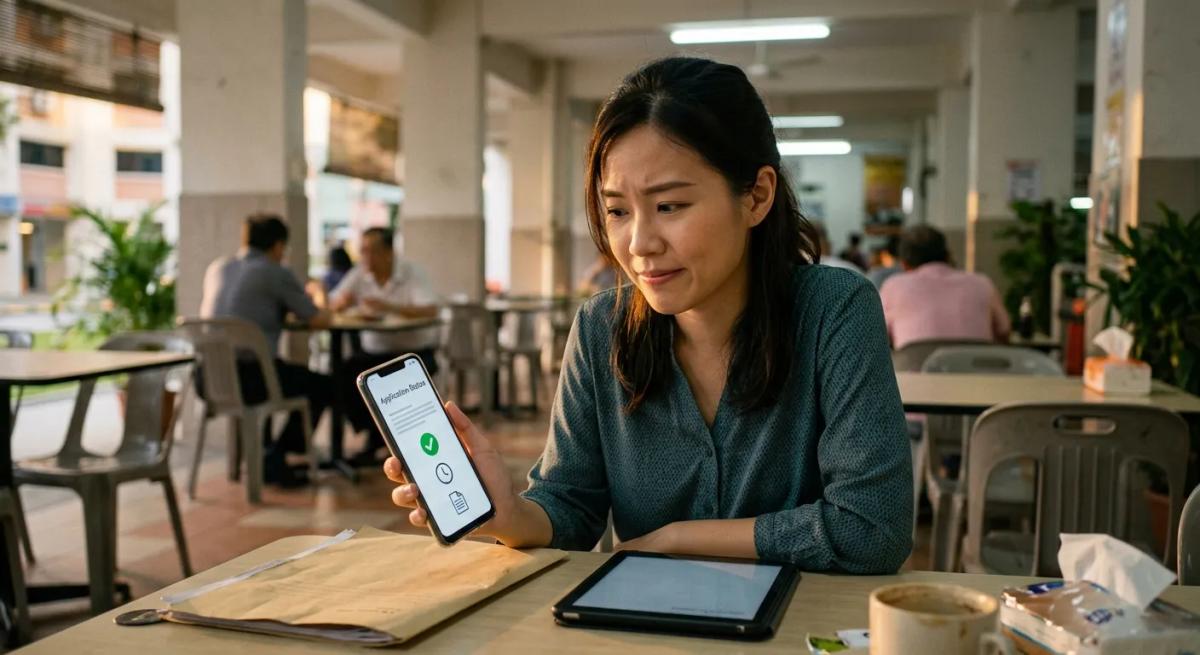
The ICA provides real-time status updates via the e-Services portal (MyICA). Here's what each status means:
Portal status sequence at a glance:
- Received (0–2 weeks) — application uploaded; ICA checks completeness.
- Additional Documents Required — affects 30–40% of applications; respond within 14–21 days.
- Under Review (2–8+ months) — employment verification, background checks, and eligibility evaluation.
- Approved — In-Principle Approval (IPA) issued; medical and formalities follow.
- Rejected — written reasons provided; appeal or reapplication are possible next steps.
"Received"
Your application has been uploaded to the ICA system and is awaiting initial review. This status typically lasts 0–2 weeks. The ICA conducts a preliminary completeness check: verifying all required fields are filled and basic documents are attached.
If you receive "Additional Documents Required" during this phase, your initial submission was incomplete. Submit missing items immediately to move to "Under Review."
"Under Review"
Your application is being actively evaluated. This is the longest phase: 2–4 months for straightforward applications, 4–8+ months for complex cases. The ICA conducts employment verification, background checks, and evaluates eligibility.
You won't receive status updates while "Under Review" — the ICA doesn't provide interim notifications. Check the portal periodically, but status won't change until a decision is made or documents are requested.
"Additional Documents Required"
The ICA needs clarification or additional information. This status affects 30–40% of applications. Requests typically include:
- Employment verification letters from employers
- Explanations for gaps in employment history
- Additional financial documentation or tax returns
- Updated personal information (address, marital status)
- Certificates or qualifications needing verification
- Police reports or explanations for past legal matters
The ICA will email you exactly what's needed and provide a deadline (typically 14–21 days). Submit quickly. Delays extend your timeline by 2–6 weeks per request. If documents don't arrive by deadline, the ICA may reject without notice.
Action required: Don't delay. Processing resumes once you submit and typically completes in 4–8 weeks.
"Approved"
You've received In-Principle Approval (IPA). This doesn't mean you're a PR yet. You still need to complete medical examinations and formalities at the ICA office. The next phase typically takes 2–4 weeks from approval to appointment availability.
"Rejected"
Your application has been unsuccessful. The ICA will provide reasons in their rejection letter. Common reasons: not meeting minimum points/salary requirements, employment verification issues, background concerns, or incomplete documentation.
What next:
- Appeal: Limited appeal options exist for PR rejections. Some can be resubmitted with additional evidence, particularly if circumstances have changed (salary increase, additional qualifications).
- Reapplication: You may reapply 6 months to 1 year after rejection, provided you address the stated reasons and strengthen your profile.
- Professional guidance: An immigration lawyer or consultant can review your rejection letter and advise on appeal or reapplication viability.
Rejection is not permanent. Many applicants strengthen their profile and successfully reapply.
What you can do while waiting for your decision
During PR processing, many applicants wonder what they're allowed to do. Can you travel? Change jobs? Here's what the law allows:
Travel internationally
Yes, you can travel, but you'll need a Re-Entry Permit (REP). Without it, leaving Singapore invalidates your work pass.
Apply for a 5-year RE-Entry Permit while your PR application is pending. Processing time: within one week for online applications in Singapore, or 4–8 weeks through Singapore's overseas missions. With REP in hand, you can travel freely. See our RE-Entry Permit Guide for details.
Cost: REP applications cost SGD 10 per year. A 5-year permit costs SGD 50 and can be processed online.
Change jobs
Yes, you can change jobs during PR processing. You must notify the ICA within 2 weeks of starting a new role. Submit a new employment letter from your employer via the e-Services portal.
If you change jobs multiple times, each change requires notification and triggers additional employment verification, potentially adding 2–4 weeks.
Renew your work pass
If your work pass is expiring before PR approval, you can renew it. Coordinate with your employer and submit the renewal application. The ICA prioritises PR applications, so renewals are usually approved quickly.
Update personal details
Notify the ICA of major changes: marriage, address changes, children born, or name changes. These don't typically delay processing, but failing to report them can raise red flags.
Things to avoid
Don't make major financial changes without documentation. Don't have legal issues. Don't leave your job without securing new employment — being unemployed raises verification concerns.
After approval: what happens next and timeline to NRIC
Receiving "Approved" status is a major milestone, but it's not the finish line. Approval doesn't mean immediate NRIC collection — there are still 6–10 weeks of formalities remaining. Here's the timeline:
Formalities timeline at a glance
- Week 0 — In-Principle Approval (IPA) letter arrives by email and post.
- Weeks 1–3 — Medical examination at an ICA-approved clinic (TB, syphilis, and other communicable diseases; approximately SGD 30–50).
- Weeks 3–6 — Police clearance: final background verification; runs automatically after medical clearance.
- Weeks 6–10 — Book formalities appointment via MyICA; expect 4–6 week waits during November–February.
- Final appointment — NRIC collection and CPF setup: collect NRIC, take the oath of allegiance, open CPF account (takes 1–2 hours).
Key note: Your official PR effective date is the IPA issuance date, not the NRIC collection date. CPF contributions are backdated to the IPA date, so you may owe contributions for months between approval and NRIC collection.
In-Principle Approval (IPA) letter
You'll receive an email and physical letter confirming In-Principle Approval. This is your proof of approved PR status during formalities. You cannot yet collect your NRIC — medical and administrative steps remain.
Medical examination (weeks 1–3)

Within 4 weeks of receiving IPA, complete a medical examination at an ICA-approved clinic. The examination checks for infectious diseases (tuberculosis, syphilis, and other communicable diseases). Results typically take 1–2 weeks after the exam.
Timeline: Book immediately after IPA. Clinic availability can have 1–2 week waits during busy seasons. The exam takes 30–45 minutes.
Cost: Medical examination costs approximately SGD 30–50 at approved clinics (2026), including chest X-ray and blood tests. Express report options (24-hour turnaround) may incur additional fees. The cost is usually non-refundable if final approval doesn't proceed for medical reasons.
Police clearance verification (weeks 3–6)
The ICA conducts final background verification after receiving your medical clearance. This is usually completed within 2–4 weeks of your medical exam. You'll receive an email when cleared, allowing you to proceed to the final appointment.
Book your formalities appointment (weeks 6–10)
Once medical clearance is complete, the ICA will send instructions to book your final appointment via MyICA. Appointment slots are typically available within 2–4 weeks, though this varies by season. During November–February, waits can extend to 4–6 weeks due to holidays and annual leave.
Check MyICA immediately after medical clearance to secure your appointment slot. Peak seasons (Christmas, Chinese New Year, year-end) have limited availability.
Total timeline from approval to NRIC collection: Typically 6–10 weeks normally, up to 12+ weeks during holiday periods (Nov–Feb). Don't schedule travel or major plans during the formalities period — you need to be available.
NRIC collection and CPF commencement (final appointment)
At your appointment, you will:
- Collect your NRIC (physical identification card)
- Take the oath of allegiance to Singapore
- Set up CPF account (Singapore's mandatory savings scheme)
- Understand your CPF contribution obligations
Your official PR effective date is the date your In-Principle Approval was issued, not the NRIC collection date. CPF contributions are backdated to your PR effective date, so you may owe contributions for the months between approval and NRIC collection.
Bring: NRIC collection notice, passport, completed ICA forms (provided in the appointment email), and identification. Appointment typically takes 1–2 hours.
Frequently asked questions
Why is my application taking longer than 6 months?
The official 6-month timeline assumes complete documentation and straightforward verification. If you're in "Additional Documents Required," experiencing employment verification delays, or submitted during a busy season (Nov–Feb), longer processing is normal.
Can I contact ICA to check on my application?
The ICA doesn't accept phone or email inquiries about application progress. Use the online status portal (MyICA). If you're past 8 months with no status change, contact an immigration consultant who can escalate inquiries.
What if I submitted incomplete documents initially?
The ICA will issue "Additional Documents Required" status and specify what's missing via email. You'll have 14–21 days to submit. Many applications experiencing 12+ month delays started with incomplete initial submissions requiring 2–3 rounds of additional document requests.
Does "Additional Documents Required" mean rejection?
No. It's normal for many applications. Once you submit requested documents, processing resumes and typically completes in 4–8 weeks.
How can I speed up processing?
- Submit a complete, well-organised application initially. Use the official ICA checklist and include every document in the correct format.
- Respond immediately to "Additional Documents Required" requests. Contact ICA via MyICA if you need clarification.
- Ensure all documents are clear and legible. Poor quality scans cause delays when verification teams can't read them.
- Apply during faster months (April–September) if flexible. November–February processing is 30–50% slower.
- Consider professional help. A licensed immigration consultant can review documents pre-submission and reduce revision requests. The cost (typically SGD 2,000–5,000) often pays for itself through faster processing.
What should I do if rejected?
The ICA will provide detailed reasons in writing. Common reasons: not meeting minimum points/salary thresholds, employment history verification issues, background concerns, or failure to respond to "Additional Documents Required" within deadline.
Next steps:
- Review the rejection letter for specific reasons
- Consult an immigration lawyer to understand your options
- If reapplying: Address the stated reasons and strengthen your profile
- Don't reapply immediately — give yourself 6–12 months to address deficiencies
Can my application be processed faster than 4 months?
Rarely. Even streamlined applications (married to SC, GIP with simple investments) typically take 2–4 months. The ICA needs time for background checks and employment verification — there's no expediting this process.
Ready to move forward?
Understanding your PR processing timeline helps you plan ahead and set realistic expectations. Submit a complete application with well-organised supporting documents and respond promptly to any ICA requests.
For a comprehensive checklist, see our PR Application Checklist. To understand the complete PR application process, see our PR Application Guide.
Need guidance on your situation? Our team can help optimise your application. Consult with our team today.
Disclaimer: This guide reflects current ICA policies and timelines as of April 2026. Processing times and procedures are subject to change. For the most current information, visit https://www.ica.gov.sg/reside/PR and the ask.gov.sg ICA FAQ section. If you have concerns about your application, consult with a licensed immigration consultant or lawyer.
Go Deeper
Related Guides
Definitive Singapore PR Application Guide 2026
Complete guide to applying for Singapore Permanent Residence in 2026. Covers all 7 eligibility categories, required documents, step-by-step ICA e-Service process, fees, processing timeline, and what to do after approval.
Singapore PR Benefits: Complete 2026 Guide (10 Core Advantages)
Discover the real benefits of Singapore permanent residency: CPF retirement savings, HDB housing at 5% ABSD, education priority, healthcare subsidies, employment freedom, travel flexibility, and the pathway to citizenship. Compare PR vs Employment Pass vs citizenship status.
Minimum Salary for PR in Singapore: What You Actually Need in 2026
There is no official minimum salary for Singapore PR, but your income still matters. This guide covers work pass salary floors, COMPASS C1 industry benchmarks by sector and age, and the non-salary factors that can make or break your application.