
PR Application
Singapore PR Benefits: Complete 2026 Guide (10 Core Advantages)
Discover the real benefits of Singapore permanent residency: CPF retirement savings, HDB housing at 5% ABSD, education priority, healthcare subsidies, employment freedom, travel flexibility, and the pathway to citizenship. Compare PR vs Employment Pass vs citizenship status.
Last updated: April 2026
Introduction: Why Singapore Permanent Residency Matters
Becoming a Singapore Permanent Resident (PR) is a significant decision that offers financial, professional, and personal advantages. If you've recently been approved or are considering PR status, you're likely asking: what exactly do I gain?
Key Benefits Overview
Singapore PR benefits at a glance
5%
ABSD on first property (vs 60% for foreigners)
3 years
Timeline to HDB resale purchase
2 years
Minimum PR tenure before citizenship
180 days
Grace period to restore PR if REP expires
Source: ICA, HDB, MOM, and CPF Board — April 2026
This guide covers the real benefits PRs enjoy that set them apart from work pass holders and foreign residents. We'll explore CPF contributions, housing opportunities, education advantages, healthcare access, employment freedom, travel flexibility, and the pathway to citizenship. You'll understand how these benefits translate into practical value for your life and finances in Singapore.
Whether you're deciding whether to pursue PR or planning what comes next, this resource walks you through ten core benefits with a comparison table showing how PR stacks against Employment Pass (EP) holders and Singapore citizens.
Need help assessing your eligibility? Start with our PR Application Checklist to identify your pathway, then read our Singapore PR Application Guide for details on the process and documentation.
Core Benefits
Ten advantages of Singapore permanent residency
CPF contributions
Automatic access to retirement savings via employer and employee contributions.
HDB resale purchase
Eligible to buy HDB flats after 3 years of PR tenure.
Property tax savings
Pay only 5% ABSD on first property, not 60%.
School priority
Tier 2 placement for children (ahead of foreigners).
Healthcare subsidies
Subsidised public healthcare (lower rates than citizens).
Employment freedom
Work for any employer without sponsorship.
Travel flexibility
RE-Entry Permit (up to 5 years) with 180-day grace period.
Citizenship pathway
Eligible after 2 years of PR tenure.
Blue NRIC
Resident identity card recognised by all institutions.
Permanence & stability
Plan long-term without renewal anxiety.
1. CPF contributions and retirement security
PRs get automatic access to the Central Provident Fund (CPF), the same as Singapore citizens. Work pass holders don't receive CPF contributions.
How CPF works for PRs

Your employer contributes a percentage of your salary to your CPF account each month. As of 2026, employers contribute roughly 17% of salary, and you contribute roughly 20% (for employees under 55, varying by age). These full rates apply from your third year of PR status onward. During your first two years, graduated (lower) rates apply — for example, first-year PRs under 55 contribute a total of roughly 9% (employer 4% + employee 5%), rising to roughly 24% in the second year. You and your employer can jointly opt into higher rates earlier. Contributions go into three accounts: Ordinary Account (OA) for housing and investment, Special Account (SA) for retirement, and Medisave Account for healthcare.
Why this matters
Over a 20-year career earning SGD $5,000 monthly, employer contributions alone add up to over SGD $200,000 in retirement savings. This is yours to use at retirement or withdraw in full if you renounce PR.
You can use your CPF Ordinary Account to purchase HDB resale flats, finance private property investments, or invest in approved products. At age 55, you can withdraw from your Retirement Fund. This is a safety net unavailable to non-residents.
Expert Tip: If you're a PR planning to stay long-term, maximise your CPF contributions early in your career while your earning years are ahead. The 20+ years of employer matching creates a retirement nest egg that compounds significantly.
2. Housing benefits: HDB resale eligibility
For many PRs, the ability to purchase an HDB (Housing Development Board) flat is significant. HDB flats are Singapore's most affordable property option, priced between SGD $300,000 and $500,000 for a resale unit compared to private condominiums at SGD $800,000–$1.2M+ for equivalent space.
HDB purchase timeline and requirements
You must have held PR status for at least 3 years before purchasing an HDB resale flat. Once eligible, you'll face quota systems in non-mature estates, but mature estates like Ang Mo Kio, Bedok, and Clementi typically have more availability.
HDB imposes income ceilings based on flat size and household composition, but PRs earning professional salaries usually qualify. You can use your CPF Ordinary Account to fund the purchase or secure a bank mortgage at competitive rates.
The ABSD advantage: a tax benefit
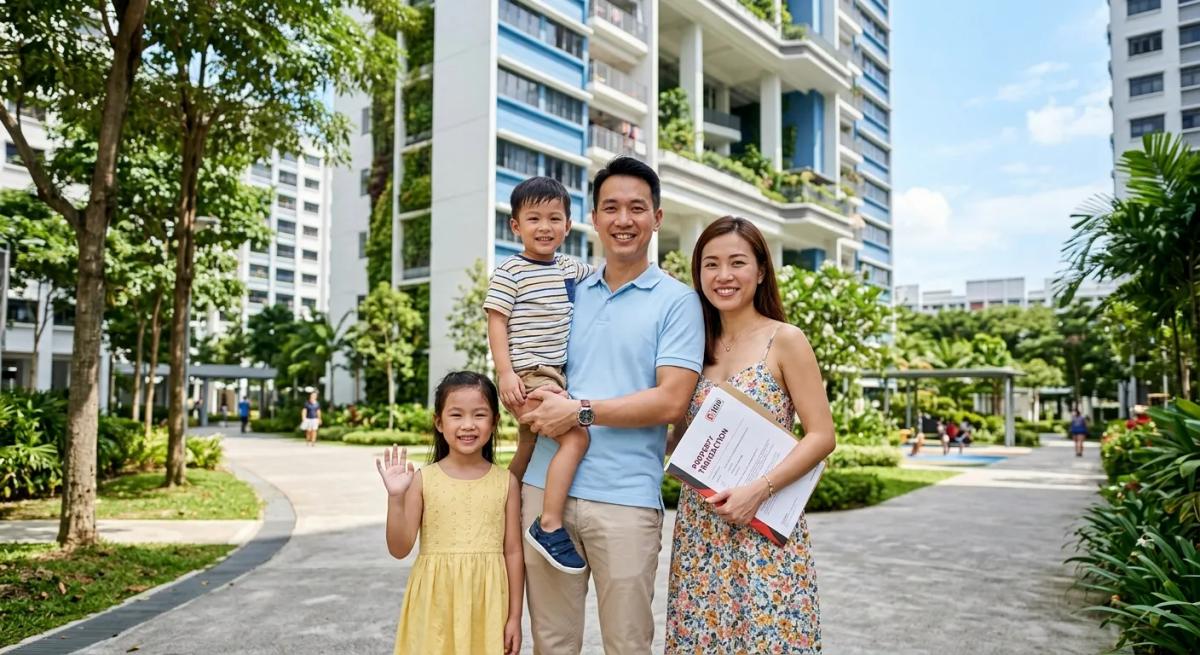
Property Purchase Costs
| Buyer Type | ABSD Rate | ABSD Cost | Total Acquisition Cost |
|---|---|---|---|
| PR (first property) | 5% | S$22,500 | S$472,500 |
| Foreigner | 60% | S$270,000 | S$720,000 |
| Singapore Citizen (first property) | 0% | S$0 | S$450,000 |
Additional Buyer's Stamp Duty (ABSD) applies differently by residency status:
- PR on first property: 5% ABSD
- Foreigner on any property: 60% ABSD
- Citizen on first property: 0% ABSD
For an HDB flat priced at SGD $450,000:
A foreigner pays $270,000 more in stamp duty alone. As a PR, you pay $22,500. This 55-percentage-point difference makes housing affordable or unaffordable.
Timing your PR approval before a property purchase can save hundreds of thousands in stamp duty.
Expert Tip: If property ownership is in your 3–5 year plan, prioritise PR approval. The ABSD savings alone often justify the effort and costs of the PR application.
3. Education priority for children
PR status gives your children educational access unavailable to children of foreigners. Singapore's school placement system uses tiered priorities:
- Tier 1: Singapore citizens
- Tier 2: Permanent Residents
- Tier 3: Foreign nationals
School placement and subsidies

Children of PRs get priority for primary and secondary school placement, ahead of children of work pass holders. This matters in Singapore's competitive education environment where many schools are oversubscribed.
Unlike Singapore citizens who pay only miscellaneous fees (SGD $5–$15/month), PR children pay school fees of roughly SGD $255–$290/month for primary school in 2026 (up from $230 in 2025 due to planned annual increases) and higher for secondary education. These rates are substantially lower than what foreign nationals pay.
Integration and stability
Tier 2 placement lets your child integrate into the local school system, learn Singapore's curriculum, and develop friendships with peers. For families planning longer stays, PR status transforms education from temporary to stable.
4. Healthcare access and subsidies
Singapore's healthcare system requires understanding eligibility. PRs have access to subsidised healthcare services, though at lower subsidy levels than Singapore citizens.
MediShield Life and Medisave
Upon PR approval, MediShield Life enrollment is automatic. MediShield Life covers hospitalisation, day surgery, and certain outpatient treatments. PRs receive lower premium subsidies than citizens — roughly half the subsidy rate that citizens receive.
You also get a Medisave account funded from your CPF contributions (typically 8–10.5% of wages, depending on age) for medical expenses including surgery, hospitalisation, and certain outpatient treatments.
Subsidised healthcare at public facilities
PR patients receive subsidised rates at government hospitals and polyclinics, though subsidies are lower than what citizens receive. A typical subsidised polyclinic consultation costs roughly SGD $20–$30 for PRs.
Note that CHAS (Community Health Assist Scheme) subsidies at participating GP and dental clinics are available only to Singapore Citizens, not PRs. However, PRs can use their Medisave balance for approved outpatient treatments at polyclinics and public hospitals.
Expert Tip: Register with a polyclinic soon after PR approval. This creates a medical record and ensures continuity of care, especially important if you have ongoing health conditions.
5. Employment flexibility: work without a pass
PRs have freedom from work pass sponsorship. Unlike Employment Pass (EP) or S Pass holders who need employer sponsorship, PRs can work for any company without notifying the Ministry of Manpower (MOM).
Career freedom and job mobility
As a PR, you can:
- Change employers without applying for a new work pass or notifying MOM
- Freelance or be self-employed without restrictions
- Accept side projects or consulting work
- Job hunt while employed without MOM delays
- Negotiate better terms without being tied to one sponsor
- Take unpaid sabbaticals
- Resign without a backup job and remain in Singapore while job hunting
Employment Pass holders cannot do these. They're legally tied to their sponsoring employer and must leave Singapore if they resign without a new sponsor.
Over a 5–10 year career, this flexibility creates significant career and earnings advantages during transitions, industry changes, or entrepreneurial ventures.
No "tied" status
As a PR, your residency is independent of employment. Work pass holders' residency depends on their sponsoring employer.
6. Travel flexibility: RE-Entry Permit and the 180-day grace period
PRs who travel frequently or maintain family ties abroad need to understand the RE-Entry Permit (REP).
Understanding the RE-Entry Permit
A REP allows a PR to leave Singapore and retain PR status upon return. Without a valid REP, you technically lose PR status upon departure. REPs are valid for up to 5 years and renewable, though ICA may grant shorter validity based on factors like residency presence and economic contributions.
Effective December 1, 2025, ICA introduced a 180-day grace period. If you leave Singapore without a valid REP, you now have up to 180 days to apply for a Permanent Resident's Single-Entry Pass (PRSEP) to re-enter and retain your PR status.
Stable home base for international travel
Your travel visa requirements remain tied to your passport nationality, not your PR status. However, PR status means you always have the right to return to Singapore (with a valid REP), providing a stable home base for international travel. You won't face the risk of being stranded abroad because your work pass expired or your employer withdrew sponsorship.
Expert Tip: Apply for your REP upon PR approval rather than waiting. At only SGD $50, it's cheap insurance for travel freedom. With the new 180-day grace period, even if you lose track of renewal dates, you have a buffer.
7. Pathway to Singapore citizenship
PR status offers a straightforward path to citizenship, though it's not required. Citizenship offers voting rights and the option to sponsor family under different programs.
Citizenship eligibility
You're eligible to apply for citizenship after holding PR status for a minimum of 2 years. The application requires you to:
- Demonstrate good conduct (no criminal convictions, no political interference)
- Renounce your previous citizenship (Singapore doesn't allow dual citizenship)
- Pass an interview assessing your commitment to Singapore
Why consider citizenship?
Citizenship grants voting rights, eligibility for government scholarships if you have children, access to all public housing programmes, and permanent status.
However, citizenship requires renouncing your home country's citizenship. Many PRs stay as PRs indefinitely, enjoying practical benefits without renouncing their original nationality. Both paths are valid.
For detailed information on the citizenship pathway, eligibility requirements, and application process, see our Singapore Citizenship Guide.
8. Psychological security: permanence and stability
Beyond financial benefits, PR offers peace of mind.
Work pass holders live with renewal deadline awareness. Your Employment Pass might not renew; your employer might not want to renew sponsorship. PRs don't face this stress.
With PR status, you can:
- Plan long-term without anxiety about having to leave
- Build deeper community integration
- Raise children without risk of sudden relocation
- Invest in property knowing your residency is stable
Parents often say PR transforms their mindset from "temporary resident" to "long-term community member."
9. Blue NRIC card: identity and social status
Upon PR approval, you receive a blue NRIC (National Registration Identity Card), distinct from the pink NRIC issued to citizens and the FIN card held by foreigners. Vendors, medical staff, and government agencies immediately recognise you as a permanent resident.
The blue NRIC changes how you're perceived and treated in everyday interactions, from opening bank accounts to healthcare access to social situations where Singaporeans distinguish between permanent residents and foreigners.
10. Comparison table: PR vs Employment Pass vs Singapore citizenship
To help you understand how PR benefits compare to other residency options, here's a detailed comparison. If you're considering an Employment Pass as a stepping stone to PR, see our Employment Pass Singapore Guide and S Pass Singapore Guide for full details.
PR offers practical residency benefits without citizenship obligations, yet more stability than work pass holding.
Residency Comparison
| Benefit | Permanent Resident | Employment Pass | Singapore Citizen |
|---|---|---|---|
| CPF Contributions | Yes, ~17% employer (from 3rd year) | No (unless also a PR) | Yes, ~17% employer |
| HDB Purchase (Resale) | After 3 years | No (foreigners only private) | Yes, immediately |
| ABSD on First Property | 5% | 60% | 0% |
| School Priority for Children | Tier 2 | Tier 3 | Tier 1 |
| Healthcare Subsidies | Subsidised (lower than citizens; no CHAS) | Reduced/charged at foreigner rates | Full access (highest subsidies + CHAS) |
| Employment Freedom | Yes, no sponsorship needed | No, tied to sponsor | Yes |
| Work for Any Employer | Yes | No, employer sponsorship required | Yes |
| RE-Entry Permit Validity | Up to 5 years (with 180-day grace) | Annual/biennial depends | Not applicable (citizen) |
| Travel | Stable home base; visa tied to passport | Visa tied to passport; pass tied to employer | SG passport (194 countries visa-free) |
| Pathway to Citizenship | Yes, after 2 years | Possible if renew multiple times | N/A (already citizen) |
| Voting Rights | No | No | Yes |
| Family Sponsorship Options | LTVP for spouse/children/parents | Work pass for qualifying family | More extensive programs |
Additional advantages
PRs enjoy several other benefits:
Faster financial operations — Opening bank accounts, securing personal loans, and credit card approvals are faster with a blue NRIC.
Independence from employer issues — If your sponsoring employer faces financial trouble or compliance issues with MOM, your residency is unaffected.
Family sponsorship — You can sponsor spouses, children, and parents for Long-Term Visit Passes (LTVP), easier than family members applying as work pass holders.
Professional signal — A blue NRIC signals stability to clients and business partners, valuable for freelancers, consultants, and entrepreneurs.
Which benefits matter most to you?
The PR benefits you value depend on your personal circumstances:
Parents and families: Education priority (Tier 2 vs Tier 3) and housing affordability are top priorities, along with the security of knowing you won't be suddenly relocated.
Early-career professionals (25–35): Employment freedom and CPF retirement savings matter most. You can change jobs freely, negotiate better terms without visa sponsorship delays, and build retirement savings over 25+ years.
Mid-career professionals (35–50): Property investment and long-term stability are important. The 5% ABSD unlocks affordability. Not renewing work passes every 2 years lets you focus on career growth.
Families planning to stay 10+ years: Property ownership, education, and security transform your mindset from temporary to permanent community member.
Frequent travellers: The 180-day grace period (December 2025 change) lets you leave, miss your REP renewal, and still restore your status within 180 days.
Property investors and entrepreneurs: The 5% ABSD difference (vs 60% for foreigners) represents hundreds of thousands in savings. Employment freedom lets you run your own company without work pass sponsorship constraints.
The cumulative effect includes employment stability, financial security through CPF, affordable housing, healthcare access, family opportunity, and long-term security. Few residency statuses offer this combination.
Ready to apply for Singapore PR? Next steps
If you're exploring your PR eligibility, here are your next steps:
- Assess your eligibility using our PR Application Checklist to understand which pathway (Points-Based, Global Investor Programme, EntrePass, or Family Sponsorship) fits your profile.
- Understand the application process in detail with our Singapore PR Application Guide, which walks through documentation, timeline, and common pitfalls.
- Consult with our team to discuss your specific circumstances and maximize your chances of approval. Book a consultation with our immigration specialists who can review your profile and recommend the strongest application strategy.
Frequently Asked Questions
Q: Do I lose my PR status if I leave Singapore without a RE-Entry Permit?
A: Not immediately, as of December 1, 2025. If you leave without a valid REP, you have 180 days to apply for a Single-Entry Pass and return to restore your PR status.
Q: Can my spouse and children get PR if I'm approved?
A: Not automatically. Your spouse and children can apply for Long-Term Visit Passes (LTVP), which grant extended residency (typically 5 years, renewable) but not PR status. LTVP is easier to obtain if you're a PR.
Q: Do PRs pay the same healthcare costs as citizens?
A: Not exactly. PRs receive subsidised healthcare at public facilities (polyclinics, government hospitals), but at lower subsidy rates than citizens. For MediShield Life premiums, PRs receive roughly half the premium subsidy that citizens get. Medisave account eligibility is the same for both PRs and citizens.
Q: How long before I can apply for Singapore citizenship?
A: After holding PR status for a minimum of 2 years. However, citizenship requires renouncing your previous citizenship, so many PRs stay as permanent residents indefinitely.
Q: Can I buy private property as a PR, or only HDB?
A: Yes, you can buy private property (condominiums, landed houses, landed terraces). As a PR, you pay 5% ABSD on your first residential property, whether it's HDB or private. On a second property you'd pay 30% ABSD, and 35% on a third and subsequent properties. The 60% ABSD rate applies only to foreigners (non-citizens, non-PRs).
Q: Does my employer need to sponsor me to stay in Singapore after I get PR?
A: No. Your PR status is independent of employment. You can change jobs, freelance, or quit without affecting your residency.
Q: What happens to my PR if I'm unemployed?
A: PR status isn't affected by unemployment. You can remain in Singapore indefinitely without employment. You may need to renew your RE-Entry Permit if you travel, and you won't have CPF contributions without an employer.
Q: Are there any obligations or restrictions with PR status?
A: PRs must comply with Singapore's laws, must not interfere in domestic politics, and must maintain good conduct. Male PRs are subject to National Service obligations under the Enlistment Act.
Q: Can I sponsor my parents to come to Singapore as PRs?
A: Your parents cannot become PRs through your sponsorship, but they can apply for Long-Term Visit Passes (LTVP) under parent sponsorship programmes if you meet income requirements.
Q: What's the difference between the NRIC for PRs and citizens?
A: Citizens receive a pink NRIC, while PRs receive a blue NRIC. The colour difference is immediately visible. The back of a PR's card also displays their nationality, which is absent on a citizen's card.
Q: How do I apply for a Re-Entry Permit?
A: Apply online via the ICA website (ica.gov.sg) or at the ICA building. It costs SGD $50 and is valid for up to 5 years. Processing takes 1–2 weeks.
Final thoughts
Singapore PR status provides stability, financial security, and community belonging. Whether you value CPF retirement savings, housing affordability, education priority, or the security of permanent residency, the benefits are tangible.
For those approved, benefits compound over decades: thousands in CPF savings, hundreds of thousands in property stamp duty savings, and the security of knowing your family can plan long-term in a stable nation.
Disclaimer: This guide is accurate as of April 2026 based on official government sources (ICA, CPF, HDB, MOM, MOH, MOE). Immigration policies change periodically. Always verify current requirements and eligibility criteria directly with official government sources before making decisions based on this content. For personalised advice specific to your circumstances, consult an immigration specialist.
Go Deeper
Related Guides
Definitive Singapore PR Application Guide 2026
Complete guide to applying for Singapore Permanent Residence in 2026. Covers all 7 eligibility categories, required documents, step-by-step ICA e-Service process, fees, processing timeline, and what to do after approval.
Definitive Singapore Citizenship Application Guide 2026
Complete guide to Singapore citizenship application in 2026. Covers eligibility pathways, ICA assessment factors, required documents, step-by-step process, fees, processing times, and the February 2026 policy update on increased intake.
Minimum Salary for PR in Singapore: What You Actually Need in 2026
There is no official minimum salary for Singapore PR, but your income still matters. This guide covers work pass salary floors, COMPASS C1 industry benchmarks by sector and age, and the non-salary factors that can make or break your application.
PR Application Checklist 2026: Complete Document Guide by Scheme
Complete checklist of documents needed for Singapore PR application in 2026 — PTS and sponsored applicants — with preparation tips and submission steps
Keep Reading
Related Posts
Singapore PR Application Guide 2026: Updated Requirements, Process and Tips
Complete guide to Singapore PR application updated for 2026. Eligibility by scheme, step-by-step ICA process, salary benchmarks, documents, and common mistakes to avoid.
6 Key Differences Between Singapore PR and LTVP (2026 Guide)
PR and LTVP both let you live in Singapore, but work rights, CPF, housing, healthcare, and school fees differ sharply. Here are the 6 differences that matter most in 2026.