
Living in SG
MediSave and Healthcare for Singapore PRs: What You Get in 2026
How healthcare works for Singapore PRs: MediSave contributions and uses, automatic MediShield Life cover, the lower PR subsidies at public hospitals, CHAS exclusion, and how to budget for a PR household.
Last updated: 1 September 2026
If you have just received your blue IC, one of the first questions to sort out is how healthcare works now that you are a Permanent Resident. The short answer: MediSave for PRs in Singapore works much like it does for citizens, and you are automatically covered by MediShield Life. The longer answer is that PRs sit one rung below citizens on government subsidies, and a few schemes are closed to you entirely.
This guide walks through the whole picture: how you contribute to and spend MediSave, what MediShield Life pays for PRs, where your hospital subsidies are lower than a citizen's, which schemes you cannot join, and how to plan a healthcare budget for a PR household. All figures are dated and cited to the Ministry of Health (MOH) and the CPF Board so you can check them yourself. Becoming a PR brings a stack of other benefits too; for the full list, see our guide to Singapore PR benefits.
Do PRs get healthcare benefits in Singapore?
Yes, but on a tiered basis. Singapore funds healthcare through what MOH calls the "3Ms": MediSave (your compulsory medical savings), MediShield Life (national health insurance), and MediFund (a safety-net endowment). As a PR you take part in the first two. MediFund is reserved for citizens.
The guiding idea is "differentiated support": everyone who lives and works here pays into the system, but the government directs the deepest subsidies to citizens first. So a PR is fully inside the healthcare system, just with lower subsidy rates than a citizen at the same income level. Knowing exactly where those gaps fall is what lets you plan properly.
MediSave for PRs: your own healthcare savings
MediSave is part of CPF, and CPF becomes compulsory from the day you attain PR status. A slice of every month's salary goes into your MediSave account, currently between 8% and 10.5% of your wages depending on your age group (CPF Board, accessed 2026). Your employer's and your own contributions together fund this.
If you are a first- or second-year PR, note that CPF contributions usually start at graduated (lower) rates for the first two years, unless you and your employer jointly apply to the CPF Board to pay at full rates sooner. Because MediSave is a fixed share of your CPF, a lower CPF rate in years one and two means a smaller MediSave inflow at first. We cover the mechanics in detail in our CPF guide for Permanent Residents.
There is a ceiling on how much you can hold in MediSave, called the Basic Healthcare Sum (BHS). From 1 January 2026 the BHS is S$79,000 for members aged 65 and below (CPF Board, accessed 2026). Once you hit the cap, further MediSave contributions overflow into your other CPF accounts.
What you can spend MediSave on
MediSave covers more than big hospital bills. Approved uses include:
- Hospitalisation and day surgery at public and approved private hospitals.
- Selected outpatient treatments, including chronic disease management (for example diabetes and high blood pressure), vaccinations, health screenings, and scans such as CT and MRI.
- Insurance premiums for MediShield Life, Integrated Shield Plans, ElderShield, and CareShield Life.
- Rehabilitation and palliative care.
- MediSave Care, which lets members aged 30 and above with severe disability withdraw up to S$200 a month from their own or their spouse's MediSave (a minimum balance of S$5,000 must remain).
You can also tap your MediSave to pay for eligible family members: your spouse, children, parents, grandparents, and siblings. One catch for PRs to note is that grandparents and siblings must themselves be Singapore Citizens or PRs for you to use your MediSave on their bills (CPF Board, accessed 2026).
MediShield Life for PRs: automatic coverage
Here is the reassuring part. MediShield Life covers every Singapore Citizen and PR automatically, with no application and no sign-up (MOH, accessed 2026). The moment you become a PR, you are in.
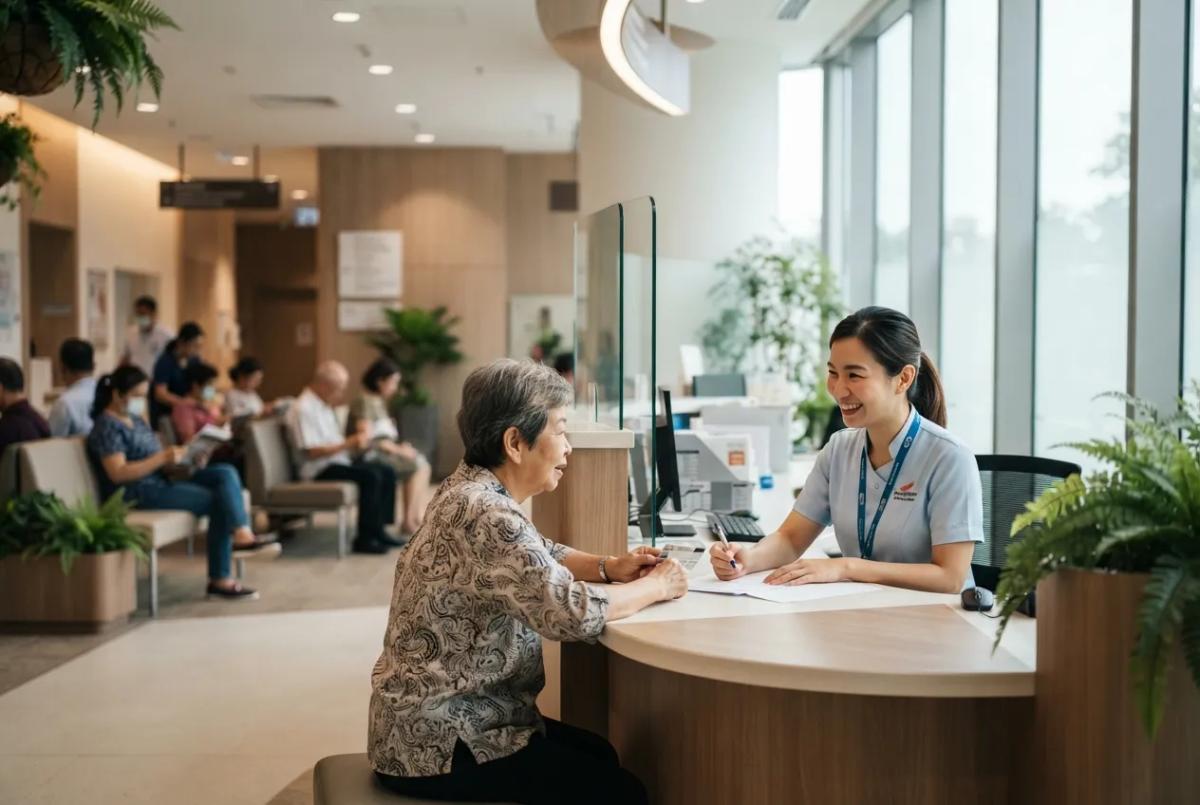
MediShield Life is designed for large hospital bills and a handful of costly outpatient treatments such as kidney dialysis and cancer chemotherapy. It is built around subsidised treatment in B2 and C wards of public hospitals, so payouts are pegged to those charges. Premiums rise with age, and they are deducted automatically from your MediSave, with any subsidies applied first (CPF Board, accessed 2026). For most working PRs this means MediShield Life effectively pays for itself out of MediSave, with nothing coming from your take-home pay.
There is one clear difference from citizens: PRs receive half the premium subsidy that a Singapore Citizen gets at the same income level (MOH, "premiums and subsidies", last updated 2025). Premium subsidies are means-tested on monthly household income per person (per capita household income, or PCHI) and home Annual Value (AV). The bands below show the citizen rates; a PR receives half of each rate.
- Household PCHI S$0 to S$1,500: Singapore Citizen 25% to 60% (tiered by age); PR receives half the citizen rate.
- Household PCHI above S$1,500 to S$2,600: Singapore Citizen 20% to 55%; PR receives half the citizen rate.
- Household PCHI above S$2,600 to S$3,600: Singapore Citizen 15% to 40%; PR receives half the citizen rate.
Rates apply where home AV is S$21,000 or below. AV of S$21,001 to S$31,000 reduces the subsidy by 10 percentage points; AV above S$31,000 receives no premium subsidy. Source: MOH MediShield Life premiums and subsidies, last updated 2025.
One thing helps both groups right now: to cushion the premium increases from the 2024 MediShield Life review, MOH is giving Phased Support to all Singapore Citizens and PRs for two policy years from 1 April 2025, regardless of income or AV. It is time-limited, so check the current position with MOH before budgeting.
MediShield Life payouts are also pro-rated. Because a PR receives a smaller government subsidy on the underlying bill, the subsidised charge the payout is benchmarked against is lower than a citizen's, so the payout is smaller and your out-of-pocket share larger for the same procedure. The exact pro-ration factor depends on ward class, treatment, and residency status, so run your case through the MOH claim calculator rather than assuming full-bill cover.
Lower government subsidies: the PR vs citizen gap
This is the section most competitor articles skip, and it is where the real money is. Beyond insurance premiums, the government subsidises the hospital bill itself for treatment in subsidised (B2 and C class) wards at public hospitals. Citizens and PRs both get these subsidies, but at different rates.
For acute inpatient care, Singapore Citizens receive up to 80% subsidy and PRs receive up to 50% in B2 and C wards, means-tested by household PCHI, effective 1 October 2024 (MOH, accessed 2026). Across every income band, a PR's subsidy is exactly half a citizen's. The table below shows the full schedule.
Healthcare subsidy for PR vs citizen
| Household PCHI (per person) | Subsidy: Singapore Citizen | Subsidy: PR |
|---|---|---|
| S$2,100 and below | 80% | 50% |
| S$2,101 – S$2,300 | 75% | 42.5% |
| S$2,301 – S$2,600 | 70% | 35% |
| S$2,601 – S$3,000 | 65% | 32.5% |
| S$3,001 – S$3,300 | 60% | 30% |
| S$3,301 – S$3,600 | 55% | 27.5% |
| Above S$3,600 | 50% | 25% |
The practical takeaway: a PR admitted to a subsidised ward pays a larger share of the bill than a citizen in the same room. On a S$10,000 subsidised bill, a top-tier citizen subsidy of 80% leaves S$2,000 to settle, while a PR's 50% leaves S$5,000. MediShield Life and any Integrated Shield Plan then help with what remains. Polyclinic and some outpatient subsidies follow the same citizen-first logic, so expect to pay a little more there as well.
CHAS and other schemes: where PRs are excluded
A few schemes are closed to PRs no matter your income.
The Community Health Assist Scheme (CHAS) subsidises visits to participating GP and dental clinics for common illnesses and chronic conditions. CHAS is for Singapore Citizens only. PRs are not eligible for a CHAS card or its benefits at any income level (CHAS and MOH, accessed 2026).
This creates what we call the PR household paradox. If your spouse or child is a Singapore Citizen, they can apply for CHAS, but eligibility is assessed on the whole household's PCHI. Because your PR income is counted in that calculation, it can push the household into a higher income tier and shrink the citizen family member's CHAS subsidy. In other words, your income can quietly reduce a citizen relative's benefit.
MediFund, the endowment fund that helps patients who still cannot afford their bills after subsidies and insurance, is also reserved for Singapore Citizens. As a PR you would not have MediFund to fall back on, which is one more reason to keep adequate insurance in place.
One door stays open: Healthier SG. Although PRs are excluded from CHAS, Permanent Residents aged 40 and above can enrol in Healthier SG, the national preventive-care programme. It pairs you with a regular GP and a personalised health plan for preventive care and chronic-disease management. Some Healthier SG financial subsidies are delivered through CHAS and so remain limited to citizens, but enrolment itself is open to eligible PRs, an often-overlooked way to stay on top of routine health despite the CHAS exclusion.
Integrated Shield Plans for PRs
MediShield Life is built around subsidised B2 and C wards. If you would rather have the option of a Class A ward or a private hospital, you can top up with an Integrated Shield Plan (IP) from a private insurer. IPs wrap around MediShield Life and are open to PRs.
You can pay IP premiums from your MediSave, up to the Additional Withdrawal Limits set by the CPF Board, with the balance paid in cash (CPF Board and MOH, accessed 2026). Many IPs also offer riders that reduce your out-of-pocket co-payment, though those riders are paid in cash, not MediSave. For a PR household, an IP is often the piece that closes the gap left by the lower government subsidies above, covering a larger share of a private or Class A bill. Match the plan to the wards you would actually use.
Healthcare for your PR family
Your family's coverage depends on each person's own immigration status, not yours.
- PR children and a PR spouse are covered by MediShield Life automatically, exactly as you are, and can benefit from the PR-level subsidies.
- Dependants on a Dependant's Pass (DP) or Long-Term Visit Pass (LTVP) are not PRs. They are not covered by MediShield Life and cannot access CHAS or the public-hospital subsidies. They pay full, unsubsidised rates, so private health insurance is essential for them.
This matters most for two groups: children who hold a DP rather than PR, and elderly parents you have brought over on an LTVP. If your parents are here on an LTVP, private insurance is the practical route to cover them. See our guides on bringing parents to Singapore on an LTVP and the Dependant's Pass for the eligibility details, and our LTVP resource guide for the wider picture.
Planning a PR household's healthcare costs
Put the pieces together and a sensible plan for a PR household looks like this:

- MediSave does the heavy lifting for premiums. Your MediShield Life premium, and usually your IP premium, come out of MediSave, so day-to-day cash flow is rarely the issue.
- Budget for the subsidy gap. Because your ward subsidy is half a citizen's, keep a cash or MediSave buffer for the larger co-payment on a subsidised hospital stay.
- Consider an Integrated Shield Plan if you want private or Class A options, and add a rider only if the cash premium fits your budget.
- Insure non-PR dependants privately. DP and LTVP holders have no MediShield Life or CHAS to lean on.
- Revisit yearly. Premiums, the BHS, and subsidy tables change. Diarise a yearly check against MOH and CPF figures.
Healthcare is one line in the wider cost of living as a PR, alongside housing and tax. It is worth reading them together: our guides to property tax for foreigners and PRs and income tax for Singapore PRs round out the household budget picture.
Frequently asked questions
Do PRs have MediSave in Singapore?
Yes. MediSave is part of CPF, and CPF is compulsory for PRs from the day you obtain PR status. A portion of your monthly salary, currently 8% to 10.5% depending on your age, goes into your MediSave account and can be used for approved medical expenses and insurance premiums.
Is MediShield Life for PRs?
Yes. MediShield Life automatically covers all Singapore Citizens and Permanent Residents, with no application needed. Premiums are deducted from your MediSave. The main difference is that PRs receive half the premium subsidy a citizen gets at the same income level.
What healthcare subsidies do PRs get in Singapore?
PRs get subsidised care at public hospitals and polyclinics, but at lower rates than citizens. For acute inpatient care in B2 and C wards, citizens receive up to 80% subsidy and PRs up to 50%, means-tested by household income and effective 1 October 2024. PRs also get half a citizen's MediShield Life premium subsidy.
Can PRs apply for CHAS?
No. The Community Health Assist Scheme is for Singapore Citizens only, regardless of income. PRs are not eligible for a CHAS card. If a citizen family member applies for CHAS, note that your PR income is counted in the household means-test and may reduce their subsidy tier.
Can I use my MediSave for my family?
Yes. You can use your MediSave for your spouse, children, parents, grandparents, and siblings. For grandparents and siblings, they must themselves be Singapore Citizens or PRs. Approved uses include hospitalisation, day surgery, selected outpatient treatments, and insurance premiums.
Get help with your PR journey
Healthcare entitlements are one of many things that change when you become a Permanent Resident. If you are still working towards PR, or planning your family's move, our consultants can help you understand where you will stand and build the strongest possible application. Learn more about our Singapore PR application service.
This article is for general information and reflects MOH and CPF Board figures current as of the last updated date above. Healthcare subsidies, premiums, and the Basic Healthcare Sum are reviewed regularly. Always confirm the latest figures with the Ministry of Health (moh.gov.sg) and the CPF Board (cpf.gov.sg) before making decisions.
Go Deeper
Related Guides
Singapore PR Benefits: Complete 2026 Guide (10 Core Advantages)
Discover the real benefits of Singapore permanent residency: CPF retirement savings, HDB housing at 5% ABSD, education priority, healthcare subsidies, employment freedom, travel flexibility, and the pathway to citizenship. Compare PR vs Employment Pass vs citizenship status.
Buying Property in Singapore as a PR or Foreigner (ABSD, Rules & Costs)
A Singapore PR pays 5% ABSD on a first home while a foreigner pays 60%. This guide covers what PRs and foreigners can buy, current ABSD, BSD and SSD rates, financing limits and the full upfront cost.
Long-Term Visit Pass (LTVP) Singapore: Complete Guide to Eligibility, Application & Rights
Comprehensive guide to LTVP eligibility, application process (ICA and MOM), fees, rights, renewal, and pathway to PR for foreign nationals in Singapore.


Keep Reading
Related Posts
CPF Guide for Singapore Permanent Residents (2026): Contribution Rates, Accounts, and Withdrawal Rules
A complete guide to CPF contribution rates for new Singapore PRs in 2026, covering the graduated rate schedule, OA/SA/MA account splits, withdrawal rules, and what happens to your CPF if you leave Singapore.
Income Tax for Singapore PRs: Rates, Reliefs and Filing Guide (2026)
A practical guide to Singapore income tax for Permanent Residents, covering progressive tax rates for YA 2026, key reliefs like CPF and SRS, how PR tax compares with EP holders, and step-by-step filing instructions.